

 Login
Login
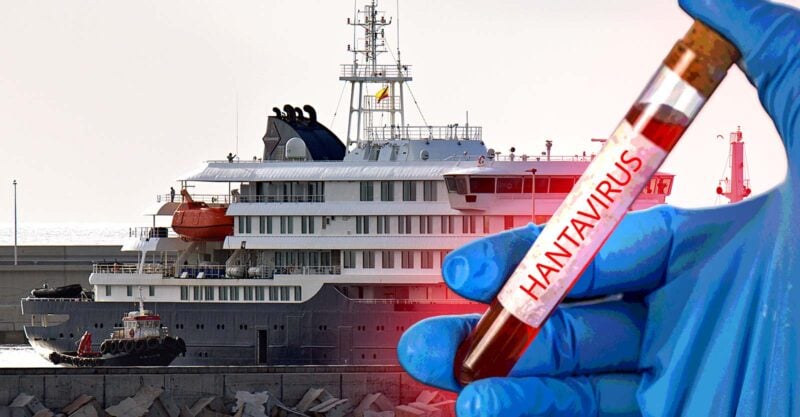


Today marks the first major benchmark in what medical commentator John Campbell, Ph.D., said on Tuesday is a crucial several-week window for determining whether the Andes hantavirus outbreak linked to the MV Hondius cruise ship spreads beyond its passengers and crew.
For now, Campbell said there is no sign of widespread transmission and no reason for public panic.
“At the moment, there’s no evidence of viral spread beyond the confines of the ship,” Campbell said.
The hantavirus outbreak has drawn international attention after multiple people on the cruise ship contracted the virus, and three passengers died.
About 149 passengers and crew are believed to have been aboard the ship. All passengers have since disembarked.
According to the World Health Organization (WHO), as of May 13, there were 11 reported cases tied to the ship — eight confirmed cases, one inconclusive case and two probable cases. Two of the deaths were confirmed as hantavirus-related, while the third is considered probable.
Campbell identified 70-year-old Leo Schilperoord as the “first generation” patient in the outbreak, meaning he is believed to be the first known hantavirus case aboard the ship. Schilperoord, his wife and another passenger from Germany later died.
Most hantavirus strains spread through rodent exposure rather than human transmission. However, the Andes strain can spread from person to person.
Transmission typically occurs through bodily fluids, though Campbell said airborne spread may also be possible based on the cases linked to the ship.
“The doctor on the ship actually thinks there was some proximity spread,” Campbell said.
Still, Campbell emphasized that the virus appears far less transmissible than COVID-19 and said any additional spread would likely remain limited.
“Much, much, much harder to catch than COVID, it would appear,” Campbell said.


‘Every day that goes by from the 15th of May with no cases starts to be encouraging’
The biggest question now is whether additional cases begin appearing over the coming weeks, he said.
Because hantavirus can incubate for up to eight weeks, Campbell said it may take until the end of June before health officials can confidently determine whether the outbreak has fully ended.
He outlined several key dates to watch:
- May 15: Earliest likely window for exposed passengers who left the ship on April 24 — before anyone knew there was a hantavirus outbreak — to begin developing symptoms. About 29 passengers disembarked that day and traveled internationally. Campbell said the timeline is based on the Andes strain’s incubation period and the average symptom onset of roughly 22 days.“Every day that goes by from the 15th of May with no cases starts to be encouraging,” Campbell said.
- May 19: Approximate date when additional infections among passengers exposed aboard the ship — what Campbell described as “second generation” cases — could begin appearing.“If they start developing symptoms, that will mean there’s more spread on the ship than we thought there was,” Campbell said.
- May 19 through late May: Earliest possible window for “third generation” cases — infections in people who were never aboard the ship — if presymptomatic spread occurred.“If any people who weren’t on the ship get symptoms by the 19th of May, that means they caught it from people who were presymptomatic,” Campbell said. Campbell stressed that he believes this scenario is unlikely.
- June 5: More likely timeframe for possible third-generation cases to emerge if infected passengers transmitted the virus after becoming symptomatic.“If people become symptomatic who are on the ship, once they’re symptomatic, they’re more likely to spread the disease because they have … more viruses in their body,” Campbell said. “And if they then give it on to other people, then the 5th of June is the time that those third-generation cases could present.”
- End of June: Point at which officials may be able to declare the outbreak over if no new cases emerge.“It’s going to be the end of June before we know before we can say definitively that this outbreak is over because of the long incubation period,” Campbell said.
Campbell said he expects there may still be “a few additional cases” before then, but believes any spread would likely be confined to household members and close partners rather than the broader public.
“At the moment, no cause for public health concern beyond the people that were on the ship who are anxiously waiting to see if they get symptoms and potentially people in the same households as them,” he said.
The Defender is 100% reader-supported. No corporate sponsors. No paywalls. Our writers and editors rely on you to fund stories like this that mainstream media won’t write. 

This article was funded by critical thinkers like you.
‘To date, no cases of Andes virus’ in U.S. ‘as a result of this outbreak’
According to the Centers for Disease Control and Prevention, “To date, no cases of Andes virus have been confirmed in the United States as a result of this outbreak.” However, the agency is monitoring 41 people in the U.S., CNBC reported today.
U.S. officials have also sought to reassure the public. Earlier this week, Robert F. Kennedy Jr. said the virus is “under control” in the U.S.
Meanwhile, some suspected cases have already been ruled out.
Campbell said a flight attendant initially believed to have contracted the virus from Schilperoord’s wife later tested negative.
Similarly, according to CBS News reporting, a German passenger who had close contact with one of the deceased passengers also tested negative for the Andes strain.
Symptoms typically appear between one and eight weeks after exposure and commonly include fever, fatigue and severe muscle aches, especially in the hips, thighs and back.
Campbell also noted that the disease’s long incubation period may help doctors identify infections through antibody testing once symptoms emerge.
“Due to the long incubation period, immunoglobulin antibodies — so blood tests to see if there’s antibodies — usually present by the time the patient is ill,” he said.
While Campbell criticized declining public trust in health authorities, he said current evidence still points toward a limited outbreak rather than widespread transmission.
“All the public health officials are saying there’s not going to be an outbreak,” Campbell said. “But, of course, no one trusts them anymore.”
Still, current evidence points to a limited outbreak rather than widespread transmission, he added.
Watch Campbell map out his timeline here:
Related articles in The Defender
