Login
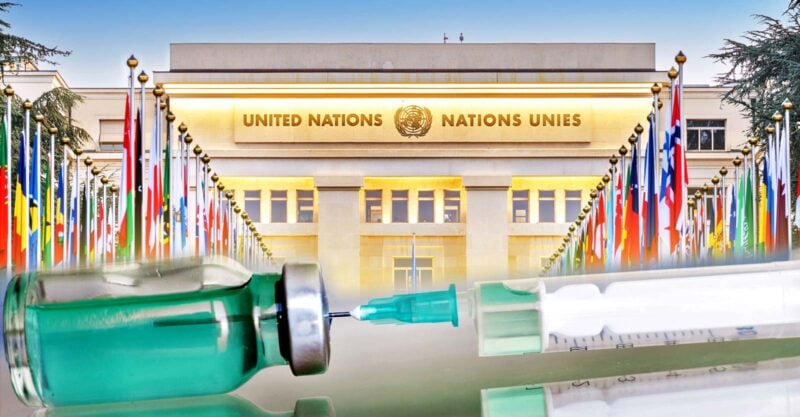


The United Nations is renewing a push to build the infrastructure needed to develop a vaccine within 100 days of the next pandemic, an effort backed by Bill Gates and the Gates Foundation.
In a policy brief published earlier this month, the UNU Institute for Water, Environment and Health said the goal is equity-driven — to help low-income countries access vaccines as quickly as wealthier countries during a global health emergency.
According to the brief, models suggest that rolling out the COVID-19 vaccine within 100 days of sequencing the virus would have saved about 8 million lives by the end of 2021, and up to $14 trillion in healthcare costs and lost productivity.
Based on those projections, improving vaccine equity in future pandemics will require the global health community to prioritize regional manufacturing capacity alongside “resilient, pre-established preparedness frameworks.”
One such framework, according to the report, is “The 100 Days Mission” — a Coalition for Epidemic Preparedness Innovations (CEPI) initiative that aims to “potentially contain outbreaks before they spiral out of control.”
An ‘absolute nightmare waiting to happen’
The 100 Days Mission can contribute to “a global system that can respond quickly to future health emergencies while directing protection to populations with the greatest need,” according to the U.N. brief.
But for Brian Hooker, Ph.D., chief scientific officer at Children’s Health Defense (CHD), prioritizing speed over safety leaves insufficient time to evaluate the efficacy or potential risks of vaccines. Hooker called the plan an “absolute nightmare waiting to happen.”
He added:
“No intervention that is untested should be rolled out within 100 days of a ‘pandemic threat’ … Even if the platform to roll out a shot was adequately tested, there would be no clues as to how the vaccine antigen … would react physiologically, no time for animal studies and no evaluation of any long-term sequelae to vaccination.
“Not only would this produce a vaccine that doesn’t work, but also it could cause way more damage than the infection that inspired the intervention.”
Jeffrey Tucker, president and founder of the Brownstone Institute, told The Defender the U.N. plan lists lockdowns as a key component of containing a future outbreak.
“This plan imagines 100 days of lockdown before the release of the shot, if that is even possible. Compliance with this will be very low,” Tucker said.
According to Tucker, there’s no record of any pandemic having been stopped by vaccines, because vaccines “cannot stay ahead of mutations.” He said the shots “will drive the mutations and thereby deprecate the shot formula.”
“This plan exists on paper and has nothing to do with reality. If attempted, it could conceivably do more harm than the previous attempt during COVID,” Tucker said.


CEPI linked to the Gates Foundation, World Economic Forum
CEPI’s 100 Days Mission, launched in 2021, is backed by the G7 and G20 governments, which represent the world’s largest economies, and the Gates Foundation and the Wellcome Trust, which co-launched the mission.
In 2017, the Gates Foundation co-launched CEPI with the Wellcome Trust, the governments of Germany, India, Japan and Norway, and the World Economic Forum (WEF). CEPI was officially unveiled at that year’s WEF meeting in Davos, Switzerland, with the backing of the World Health Organization (WHO).
In 2022, the Gates Foundation and Wellcome Trust pledged $300 million to CEPI to “fight COVID-19,” develop “next generation” COVID-19 vaccines, and “combat” the “threat of future pandemics.”
Gates Foundation members sit on CEPI’s board of directors and its Scientific Advisory Committee.
In turn, Gavi, the Vaccine Alliance, sits on CEPI’s Joint Coordination Group. The Gates Foundation is the largest private donor to Gavi. It funded Gavi’s launch and holds a permanent seat on Gavi’s board.
Last year, the Gates Foundation pledged $1.6 billion over five years to Gavi. The Gates Foundation and Gavi are two of the largest donors to the WHO.
Researcher James Roguski told The Defender that the U.N. policy brief and 100 Days Mission are intended to generate big profits for Big Pharma. The WHO and other government health agencies have “long been captured” by what he called “the Pharmaceutical Hospital Emergency Industrial Complex,” he said.
“Their guise is to talk about pandemic prevention, preparedness and response while their goals are to increase production, promotion, procurement and profit from their pharmaceutical-based pandemic-related products,” Roguski said.
Dr. David Bell, a public health physician, biotech consultant and senior scholar at the Brownstone Institute, said the guise includes cloaking documents like the policy brief and the 100 Days Mission in the language of “equity.”
“This document is typical of the literature coming out pushing for a neocolonialist diversion of global health resources, from the drivers of high-burden remediable diseases in low-income populations to highly profitable commodities produced by large pharmaceutical corporations,” Bell said.
Bell said the policy brief “ignores contrary evidence and relies heavily on incoherent modeling.” He said that the claim of 8 million lives saved if a COVID-19 vaccine had been available within 100 days of the sequencing of the virus is higher than the official number of COVID-19 deaths the WHO has recorded.
Hooker said that rather than rushing to release potentially risky vaccines — “a cadre of repurposed drugs that we know are strong anti-infectives or anti-virals” — should instead be used during a future outbreak. Hooker said such proven medicines are designed to “combat the infection rather than prevent it.”
The Defender is 100% reader-supported. No corporate sponsors. No paywalls. Our writers and editors rely on you to fund stories like this that mainstream media won’t write. 

This article was funded by critical thinkers like you.
‘Globalists really want’ Pandemic Agreement
In an interview with The Defender earlier this month, Bell said the push to target low-income nations with “saleable commodities for rare but very profitable international outbreaks” also involves efforts to finalize the WHO’s Pandemic Agreement and related pathogen access and benefit-sharing (PABS).
Countries would share biological samples and genetic data in exchange for “any resulting vaccines, treatments and diagnostics” if they agree to PABS. The Pandemic Agreement, passed at the WHO’s World Health Assembly last year, cannot be formally “opened for signature” until talks on PABS are completed.
Roguski said several articles in the Pandemic Agreement reflect these priorities.
The clauses call on countries to encourage vaccine makers and manufacturers of other pandemic products to obtain regulatory approval and WHO approval for use, improve WHO procedures for assessing these products, and track funding sources and money allocated to countries to implement the Pandemic Agreement.
Kaveh Madani, Ph.D., one of the brief’s co-authors, emphasized these priorities. Madani said nations “must strengthen the foundations for equity through cooperative global mechanisms that can effectively improve financing, manufacturing and delivery.”
Earlier this month, the U.N. General Assembly adopted a “Political declaration on pandemic prevention, preparedness and response,” calling for stronger global medical and scientific cooperation to address the threat of future pandemics and for the finalization of the Pandemic Agreement.
The legally nonbinding declaration passed by a vote of 153-3. The U.S. opposed it.
Bell cited the Re-Evaluating the Pandemic Preparedness And REsponse agenda (REPPARE) project, a series of 13 publications arguing that the urgency and scale of the international pandemic-preparedness agenda are not supported by sufficiently robust, transparent and independent evidence.
REPPARE, for which Bell served as co-principal investigator, also identified uncertainty in predictions of future pandemic risk, statistical models based on questionable assumptions, a body of evidence lacking independent confirmation, and insufficient cost-benefit analysis of initiatives such as the 100 Days Mission.
Karl Jablonowski, Ph.D., CHD’s senior research scientist, cited the model underpinning the policy brief, which estimated that 8.3 million lives could have been saved if COVID-19 vaccines had been available within 100 days.
Jablonowski said the 8.3 million figure is “based on a 2024 Lancet Global Health article, which draws from a 2022 Lancet Infectious Disease article by the same authors.”
That model has faced criticism. One paper states that the model did not “adequately account for the complexity of the biological, social and cultural dimensions of public health.” As such, the model “should not be used to guide public health policy.”
Bell said the authors of the policy brief “may not fully understand the poor quality of the data and modeling they are quoting.”
Roguski said negotiations on PABS resume Nov. 2. He said that if these negotiations ultimately succeed, “then these issues may be formally incorporated into a legally binding international agreement.”
Writing on Substack, physician Dr. Meryl Nass, founder of Door to Freedom, suggested that key global actors will continue pushing for the 100 Day Mission.
“The globalists really want it,” Nass wrote. “It is coming.”
Related articles in The Defender
- UN Adopts ‘Pandemic Preparedness’ Declaration — But U.S. Votes No
- Did ‘Disinformation Dozen’ Authors Team Up With Gavi to Target RFK Jr.’s Presidential Run?
- ‘We Need to Reboot the Whole System’: RFK Jr. Addresses WHO Via Video as Member States Pass Global Pandemic Agreement
- Gates Pledges $1.6 Billion for More Vaccines for Poor Countries, as RFK Jr. Stands by U.S. Decision to Cut Funding
- Trump Orders U.S. to Withdraw From World Health Organization
- WHO Promotes Farrar, Fauci Ally and Architect of COVID Mass Vaccination Policies