

 Login
Login
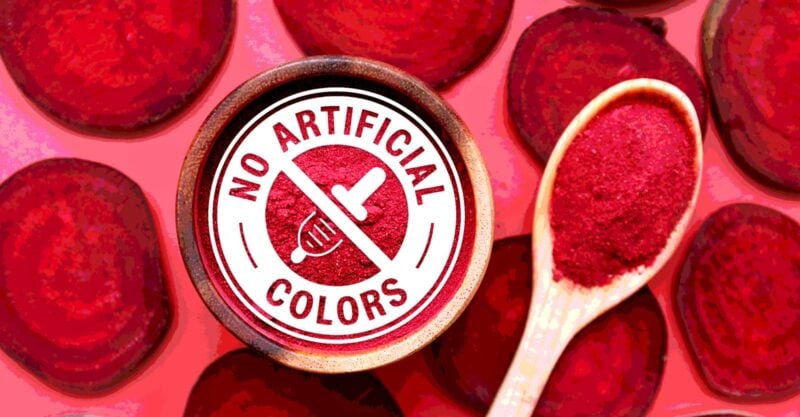


The U.S. Food and Drug Administration (FDA) last week made it easier for food manufacturers to claim their products contain “no artificial colors” — even when the products contain added dyes.
Previously, companies could use that label only if a product contained no added dyes. Under the new FDA guidance, manufacturers can claim “no artificial colors” as long as the added dyes are naturally derived and not petroleum-based.
“This is real progress,” said U.S. Health Secretary Robert F. Kennedy Jr. “We are making it easier for companies to move away from petroleum-based synthetic colors and adopt safer, naturally derived alternatives. This momentum advances our broader effort to help Americans eat real food and Make America Healthy Again.”
However, critics said the change falls short because it relies on industry compliance rather than enforceable rules.
Ken Cook, president and co-founder of the Environmental Working Group, called the move “another broken promise.”
The FDA “pledged outright bans on dangerous food chemical additives,” Cook said in a statement. “Instead Kennedy settles for handshake deals with Big Food and chemical companies — agreements with no real accountability and no guarantee they’ll be honored.”

Natural dyes not necessarily ‘inherently safer’
Last week, the FDA also approved beetroot red, a reddish-purple pigment from beets, and expanded the use of spirulina extract, a blue-green pigment from algae.
The FDA approved four other natural color additives in 2025:
- Galdieria extract blue, from red algae.
- Butterfly pea flower extract, from butterfly pea flowers.
- Calcium phosphate, a mineral-based white color.
- Gardenia (genipin) blue, from gardenia fruit.
These six natural dyes can be used to color a variety of foods, including candy, gum, frosting, ice cream, chips, cereals, smoothies and beverages.
Under the FDA’s previous rules, foods using these naturally derived dyes still fell under the “artificial” umbrella.
“We acknowledge that calling colors derived from natural sources ‘artificial’ might be confusing for consumers and a hindrance for companies to explore alternative food coloring options,” said FDA Commissioner Marty Makary. “We’re taking away that hindrance and making it easier for companies to use these colors in the foods our families eat every day.”
But the change may create a new kind of confusion, as foods labeled “no artificial colors” can now contain added colorants.
The updated guidelines don’t guarantee that all additives are safe or chemical-free. The FDA uses batch certification to test additives and ensure they meet purity standards. However, some food chemicals, including natural dyes, are exempt from the process.
In a letter outlining its updated policy, the FDA reminded manufacturers using exempt color additives that they must “take all possible measures to ensure the safety” of their dyes.
The agency also urged companies to limit impurities, including heavy metals, solvent residues and microbial contaminants.
“Natural dyes do not necessarily mean ‘inherently safer,’” Madeline Peck, a registered dietitian and nutrition editor for EatingWell. “Sometimes, products will use more of a natural dye to color than they would a synthetic dye, since the natural dyes degrade faster, resulting in a more dull color.”
Online tracking site shows progress in ridding foods of petroleum-based dyes
Kennedy made changing the American diet a central focus when he took office last year.
In April 2025, he asked food companies to voluntarily remove six artificial food dyes by the end of 2026. These include Green No. 3, Red No. 40, Yellow No. 5, Yellow No. 6, Blue No. 1 and Blue No. 2.
Kennedy also urged the industry to accelerate the removal of Red No. 3, which the FDA banned in January 2025.
Studies link the dyes to cancer, hyperactivity and other neurobehavioral issues, especially in children.
The Defender is 100% reader-supported. No corporate sponsors. No paywalls. Our writers and editors rely on you to fund stories like this that mainstream media won’t write. 

This article was funded by critical thinkers like you.
In Europe, foods containing these dyes must carry warning labels stating the dyes “may have an adverse effect on activity and attention in children,” according to Food Dive.
In March 2025, Kennedy called on top executives from major food companies, including General Mills Inc. and The Kraft Heinz Co., to remove artificial dyes before the end of his term. He has since commended the companies for working with him on the issue.
An FDA public tracking site shows that many large food companies — including Campbell’s, Conagra Brands Inc., General Mills, Kraft Heinz and Walmart Inc. — are phasing out petroleum-based dyes.
In-N-Out Burger, PepsiCo Inc., Sam’s Club and Tyson Foods Inc. report that they have completed the transition.
PepsiCo listed Cheetos and Doritos as the only products affected by the pledge to remove petroleum-based food dyes. According to the FDA’s chart, updated products are “made with no artificial flavors or dyes, and completely colorless.”
Related articles in The Defender- ‘Always Listen to the Mom’: U.S. to Phase Out Artificial Dyes Used in Food Products
- FDA Approves 3 Natural Food Dyes in Move to Phase Out Toxic Synthetics
- Millions of Families Buy Foods Containing Synthetic Dyes — What Are the Risks?
- Big Food Engineered ‘Public Health Crisis,’ San Francisco Says In Lawsuit Targeting Ultraprocessed Food
