Login
Login
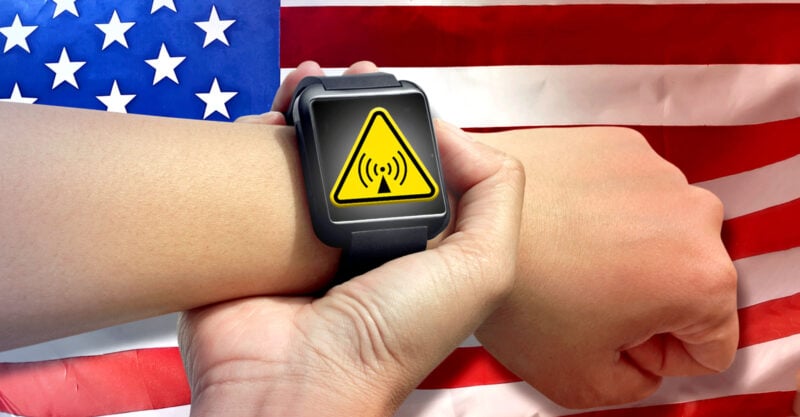


During recent congressional testimony, U.S. Health and Human Services Secretary Robert F. Kennedy Jr. stated:
“We’re about to launch one of the biggest advertising campaigns in HHS history to encourage Americans to use wearables … my vision is that every American is wearing a wearable within four years.”
Kennedy was responding to a question about whether consumers should continue to have access to wearables. He explained that wearables allow users to constantly track in real-time how food and lifestyle choices affect their health metrics. He also claimed that wearables are key to the Make America Healthy Again (MAHA) agenda.
We agree that people should be able to monitor their health in innovative ways using the technology they choose. But we do not think the federal government should try to push wearables on every American.
A wearable is an electronic device — such as a smartwatch, fitness tracker or smart ring — worn on the body. It’s made up of dozens of sensors and wireless technologies that continuously collect, monitor and transmit biometric and other sensitive data.
“We do not share this vision,” said Miriam Eckenfels, director of the Children’s Health Defense (CHD) Electromagnetic Radiation (EMR) & Wireless Program. “Quite the contrary, we oppose governmental pressure to incentivize the widespread use of wearables. They pose serious health risks, especially to children, and they threaten privacy.”
Wireless technologies, including wearables, have clear and well-documented harms. These devices continuously emit radiofrequency (RF) radiation in direct contact with the body for long periods of time.
They also have multiple transmitters/receivers (Bluetooth, Wi-Fi and cellular), operating on several different radio bands. Cumulative and long-term exposures have known significant risks.
RF radiation exposure is associated with a wide range of adverse health effects, including “increased cancer risk, cellular stress, increase in harmful free radicals, genetic damages, structural and functional changes of the reproductive system, learning and memory deficits, neurological disorders, and negative impacts on general well-being.”
A systematic review commissioned by the World Health Organization (WHO) last month concluded that there is “high certainty” evidence that cellphone radiation exposure causes two types of cancer in animals.
Higher-frequency millimeter wave (MMW) transmissions used in 5G cellular networks are also known to produce eye damage and skin burns. An industry study by the Institute of Electrical and Electronics Engineers (IEEE) concluded that overexposure to MMW is expected to produce burns “like those produced when a person touches hot objects or flames.”
Children, pregnant women at even greater risk
Children have smaller bodies, developing nervous systems, more conductive tissue and longer lifetimes of exposure compared to adults, putting them at even greater risk of harm from radiation exposure. Their cells are dividing and growing at a higher rate, so DNA damage is magnified.
Other vulnerable populations include pregnant women, and people with implanted devices, chronic health conditions and Electromagnetic Radiation Syndrome (EMR-S).
The U.S. Food and Drug Administration (FDA) has issued official guidance cautioning that individuals with pacemakers and other implanted medical devices should keep wearables like smartwatches at a distance due to potential interference and malfunction. Manufacturers like Apple also include guidelines and warnings for wearables.
This highlights a broader point: wearables are not safe or suitable for “every American.”
In 2021, CHD won a landmark case against the Federal Communications Commission (FCC), in which the U.S. Court of Appeals for the District of Columbia Circuit ruled that the FCC had failed to consider extensive evidence of harm from wireless radiation.
The court found that the FCC did not consider peer-reviewed scientific research on the harmful effects of wireless radiation exposure on children, the brain and nervous system, male fertility and people with EMR-S.
The ruling specifically cited the agency’s failure to address studies showing oxidative stress, DNA damage, and the health risks from modulation and cumulative exposure.
The court also ordered the agency to explain how its limits are protective. Yet almost four years later, the FCC has still not complied.
This ruling validated years of scientific evidence about the harms of wireless technology and confirmed that the public, including wearable users, continues to be actively misguided by industry and government agencies alike.
Biometric data collection raises privacy concerns
Wireless technologies also have extensive and well-documented privacy impacts. They continuously collect biometric data, including heart rate, quality of sleep, blood pressure, cholesterol levels, oxygen levels, calorie burn, sweat gland emissions, hormone levels, body temperature, emotional responses, movement and precise geolocation.
This biometric data is transmitted over the internet and can be used to create an intimate profile of the user’s physical and psychological states. This intimate profile can be made available to employers, medical providers, private corporations, artificial intelligence systems, insurance companies and government entities.
This surveillance infrastructure may lay the groundwork for psychological targeting, predictive modeling, social control and unprecedented intrusions into personal freedom.
These risks cannot be left out of any discussion of so-called “digital health.”
The Defender is 100% reader-supported. No corporate sponsors. No paywalls. Our writers and editors rely on you to fund stories like this that mainstream media won’t write. 

This article was funded by critical thinkers like you.
“We are eager to learn more about Secretary Kennedy’s full intent regarding wearables,” said Eckenfels. “The growing push for widespread adoption of wearables, which exposes users to constant RF radiation in direct contact with the body, is concerning and fundamentally at odds with the values of informed consent, privacy and bodily autonomy that CHD defends.”
Eckenfels added:
“The public deserves radical transparency about wearables’ health and privacy risks. Their use must remain a personal choice and not a public health objective. We do not share — indeed, we oppose — a vision where everyone is subject to constant wireless exposure in direct contact with the body and biometric tracking.
“What amounts to technocratic surveillance should not be normalized, encouraged and promoted at the federal level.”