Login
Login


By Shannon Kelleher
Following a legal challenge from environmental groups, the U.S. Environmental Protection Agency (EPA) on Dec. 15 proposed new standards aimed at reducing water pollution from slaughterhouses and meat processing plants. The move is the agency’s first such effort in two decades.
The EPA said its preferred option presented in the proposed rule could eliminate about 100 million pounds of water pollution generated by large slaughterhouse and meat processing plants each year.
The plan would put stricter limits in place for nitrogen in liquid waste that is directly discharged into waterways and would establish limitations for phosphorus for the first time.
It would also establish the first pretreatment standards for oil, grease and certain other pollutants. The standards would apply to about 845 of the 3,879 slaughter and meat processing facilities that discharge waste into U.S. waters.
“It’s a very good step in the right direction,” said John Rumpler, senior clean water director for Environment America, a network of state environmental groups. “But by EPA’s own estimates they could be doing more to curb pollution from this sector,” he said.
The EPA said its plan “follows the latest science” and “would help protect the nation’s vital water resources, which support safe drinking water, agriculture, industry, recreation activities, and thriving communities, through the implementation of affordable and available wastewater treatment technologies.”
An alternative option proposed by the EPA would apply to the same 845 facilities, eliminating an estimated 228 million pounds of water pollution per year, according to the EPA.
A third option would extend requirements to some smaller facilities, affecting almost twice as many facilities and eliminating an estimated 322 million pounds of pollution per year, the EPA said.
In addition, the EPA is proposing limits on E. coli bacteria in wastewater directly discharged into waterways, which can cause severe illness if consumed by humans.


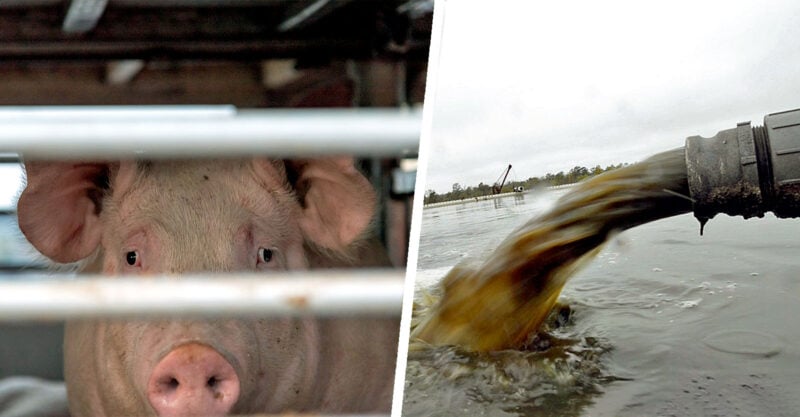
Facilities that produce meat and poultry products are a major source of water pollution in the U.S., with slaughterhouses releasing more than 55 million pounds of toxic substances into rivers and streams in 2018.
Nitrogen and phosphorus pollution in waterways “can lead to a variety of problems, including eutrophication and harmful algal blooms, which have negative impacts on human health and the environment,” according to the EPA.
This pollution may take a particularly heavy toll on low-income and/or otherwise disadvantaged — 74% of facilities that produce meat and poultry products that directly discharge wastewater into nearby waterways are located within one mile of such communities, according to a 2021 EPA study.
Despite the environmental and human health impacts of these facilities, the EPA has not updated its pollution control standards for large slaughterhouses since 2004, while its standards for smaller facilities have not budged since 1975.
Over 100 environmental groups submitted comments to the EPA in 2019 calling for the agency to reduce water pollution from these facilities. Environment America and nine other nonprofits in 2022 filed a complaint alleging that EPA’s failure to update the pollution standards for the slaughterhouse sector violated the Clean Water Act.
The agency’s announcement of the proposed rule is a result of a consent decree that set deadlines for the EPA to issue updated rules.
“We believe that America’s rivers, lakes, and streams should be safe for swimming and fishing, and clean and safe for wildlife and so forth, just as the Clean Water Act set out in 1972,” said Rumpler.
“The closer we can get to those goals that we all agreed on as a nation, the better. This is the first time that EPA would be updating these standards in nearly 20 years, so let’s get it right.”
Originally published by The New Lede.
Shannon Kelleher is a staff reporter for The New Lede.