Login
Login


By Julia Conley
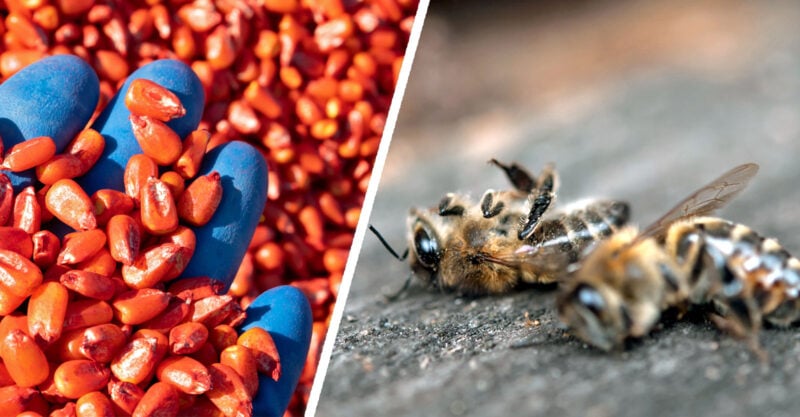
Two public health groups filed a lawsuit against the U.S. Environmental Protection Agency (EPA) last week, demanding that the agency close a regulatory loophole that has allowed insecticide-coated seeds to proliferate across 150 million acres of cropland in the United States.
The Center for Food Safety (CFS) and the Pesticide Action Network North America (PANNA) are co-plaintiffs in the lawsuit filed in the U.S. District Court in the Northern District of California, which pertains to seeds coated in neonicotinoids, often called neonics.
The EPA has long failed to regulate neonics, denying a rulemaking petition filed by CFS in 2017 which asked them to close the loophole which allows neonic-coated seeds to be used to grow corn, soy and other crops across the country.
The agency only regulates pesticides that are directly sprayed on crops, allowing companies to continue using the coatings.
The EPA ignored CFS’s petition until 2021, when the group sued to force a response, only to have the petition denied. PANNA joined CFS in the new lawsuit last week, arguing that the denial was unlawful.
“Despite knowing the ongoing grave harms caused by coated seeds, EPA has still unlawfully refused to close the loophole allowing them to escape any regulation,” said Amy van Saun, senior attorney at CFS.
She continued:
“That decision is as unlawful as it is irresponsible. EPA is supposed to protect these species and habitats, not enable their peril, and we are asking the court to tell the agency to do its job.”
Toxic neonicotinoids can cause paralysis and death in crucial pollinators including bees and butterflies.
“Ingesting one of these seeds can cause serious harm or death to a songbird,” said CFS on social media.
We join @pesticideaction to sue the @EPA for failing to close a loophole that has allowed insecticide-coated seeds to proliferate across 150 million acres of US crop land (unregulated) causing widespread harm to essential pollinators like birds and bees, beneficial insects, and… pic.twitter.com/BApnp893TH
— Center for Food Safety (@CFSTrueFood) June 2, 2023
More than 80% of a seed’s coating can spread across the environment and contaminate air, soil and waterways.
Neonic-coated corn seeds that were used as feedstock at an ethanol plant in Mead, Nebraska, in 2021 were linked to serious health issues for local residents, including throat irritation, nosebleeds and infections.
“For too long, EPA has allowed pesticide-coated seeds to jeopardize threatened and endangered species across the country,” said Margaret Reeves, senior scientist at PANNA.
Reeves continued:
“EPA must close the regulatory loophole for toxic pesticide-coated seeds to prevent further harm to wildlife, ecosystems, and people.”
Originally published by Common Dreams.
Julia Conley is a staff writer for Common Dreams.