Login
Login
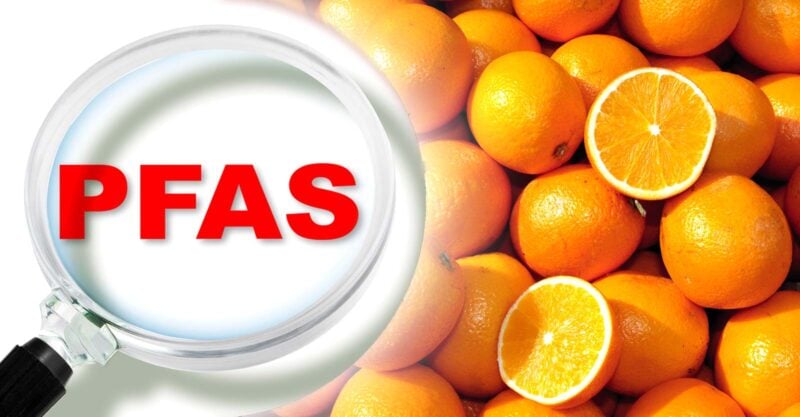


The U.S. Environmental Protection Agency (EPA) approved the highly persistent pesticide isocycloseram on Thursday for golf courses, lawns and food crops such as oranges, tomatoes, almonds, peas and oats.
The pesticide is a “forever chemical” — one of a group called PFAS, or per- and polyfluoroalkyl substances.
Today’s announcement marks the second approval of a PFAS pesticide since President Donald Trump took office, with the first approval coming just two weeks before. The administration plans to approve three more PFAS pesticides in the coming year.
“To approve more PFAS pesticides amid the growing awareness of the serious, long-term dangers from these forever chemicals is absurdly shortsighted,” said Nathan Donley, environmental health science director at the Center for Biological Diversity.
“The undeniable reality is that the Trump administration is knowingly putting the nation’s children at greater risk of developing serious reproductive and liver harms for generations to come.”
Isocycloseram is classified as moderately persistent to persistent and is known to transform into 40 smaller PFAS chemicals, some of which are much more highly persistent.
Among the most concerning harms from isocycloseram is reduced testicle size, lower sperm count and liver toxicity.
While the agency found that people would not be exposed to enough isocycloseram in their diet to cause these harms, it opted not to implement a child-safety buffer to account for the fact that children are more sensitive to chemical pollutants than adults.
If that safety buffer were included, as it is with some other pesticides, young children would have been found to be at high risk of those effects from dietary exposure.
“For all of the rhetoric about caring about children’s health and well-being, this administration is quick to throw them under the bus whenever it suits their polluting benefactors,” said Donley.
“Instead of erring on the side of safety, we get a quick, reckless approval of a new forever chemical without any real thought given to its serious harms.”
Isocycloseram is also highly toxic to bees and other pollinators, with the EPA finding that vital pollinators could be exposed to 1,500 times the lethal level of the pesticide just by collecting nectar and pollen near treated fields.
One out of every three bites of food we eat — and nearly all nutrient-dense foods like fruits and vegetables — come from plants that need to be pollinated by bees and other pollinating animals.
In 2024, a report from researchers at the Center for Biological Diversity, Environmental Working Group and Public Employees for Environmental Responsibility found that forever chemicals are increasingly being added to U.S. pesticide products, contaminating waterways and posing potential threats to human health.
While some PFAS differ in their toxicities, potential to bioaccumulate and potential to pollute water, all are highly persistent and have chemical bonds that essentially never break down. PFAS ingredients in pesticide products have been found to contaminate streams and rivers throughout the country.
As it pushed to approve PFAS pesticides, the EPA created a new webpage earlier this month to try to assure the public of its “robust, chemical-specific process” that it uses to approve any pesticide, even one that is a PFAS.
This bold new push from the EPA comes directly from the recent Make America Healthy Again strategy report. Following pressure from the pesticide industry, the report shifted its focus from highlighting pesticide harms to directing the EPA to convince the public of its “robust review procedures” for pesticides.
Under the Trump administration, the pesticide office is controlled by two former lobbyists for the American Chemistry Council, Nancy Beck and Lynn Dekleva, and one former lobbyist for the pro-pesticide American Soybean Association, Kyle Kunkler.
Originally published by the Center for Biological Diversity.