Login
Login


By Natasha Gilbert
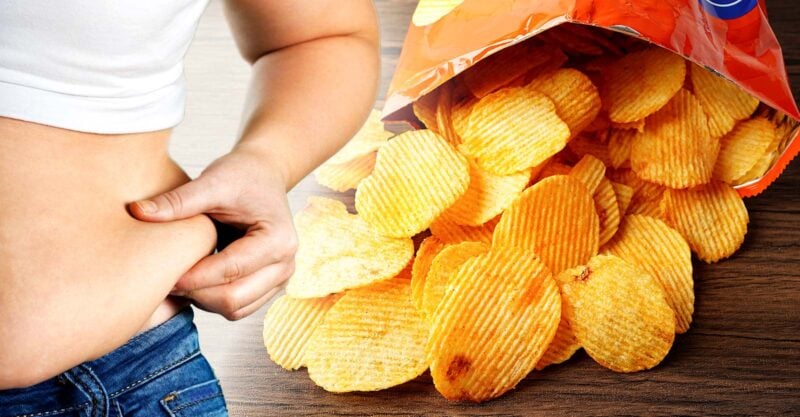
In the U.S., around half of the food that people eat every day is ultraprocessed — industrially manufactured products, like chips or candy, that are made by breaking down whole foods, modifying and combining them with additives to make them more attractive in the way they look, smell and taste.
Scientists have linked consumption of ultraprocessed foods (UPFs) to obesity and other health issues such as cancer and diabetes. Now they are starting to discover why people eat more UPFs and gain excessive weight.
Filippa Juul, a nutritional epidemiologist at Downstate Health Sciences University, part of the State University of New York, led a recent review of the evidence. Juul is a leading researcher on the impacts of UPFs on cardiovascular disease and on obesity and weight gain.
Juul talked to U.S. Right to Know about her findings.
What is the evidence linking UPF to obesity?
Multiple studies have followed people over time and seen that those who eat a diet high in UPFs tend to be at higher risk of gaining weight or becoming obese.
There is also a landmark experimental study that tested whether eating a diet high in UPFs would lead to greater energy intake and weight gain compared to a diet based on minimally processed foods or whole foods, if the two diets contained the same number of calories and macronutrients.
Previously, people assumed that UPFs would lead to weight gain because they tend to be higher in sugar and fat and lower in fiber.
But in the experimental study that was published in 2019 in the journal Cell Metabolism, 20 participants at a research hospital in Bethesda, Maryland, spent two weeks on a diet high in UPFs and then two weeks on a diet free from UPFs.
The food offered in both diets was matched for total calories and macronutrients, and participants could eat as much or as little as they wanted.
The study found that people on the UPF diet unconsciously ate about 500 more calories and gained more weight. These patients didn’t rate the food as tasting better, nor indicated they were hungrier at the start of the meal, or fuller at the end of the meal.
The study, which was led by Kevin Hall, a nutrition and neuroscientist who recently retired from the National Institutes of Diabetes and Digestive and Kidney Diseases, was replicated in a small sample by researchers in Japan.
The Japan study found that a diet of UPFs led to an intake of about 800 more calories per day compared to a traditional Japanese diet. This is the strongest evidence we have. It is quite consistent.
Why do UPFs make people eat more and gain weight?
This is still not fully understood, but there are several hypotheses that are supported by the evidence. One is that UPFs tend to have a higher energy density — per gram, they contain more calories.
When food contains more calories in a smaller volume, we tend to eat more of it before we feel full. Also, UPFs tend to have a softer texture, so people can eat them more quickly. This means our energy intake rate is higher, and the UPFs are less satiating, so we tend to eat more.
Another reason is that UPFs can be hyperpalatable. That is, food that has combinations of nutrients such as fats and salt, or sugar and fats, or carbohydrate and salt at levels over a certain threshold.
For example, potato chips have fat and salt, but not all potato chips are hyperpalatable. This doesn’t necessarily mean that consumers think they taste better. It means they are very rewarding and make people want them more and eat more.
Another potential mechanism is that nutrients in UPFs are more easily absorbed and tend to be taken up in the first part of the small intestine. This leads to lower release of appetite-regulating hormones that are triggered when nutrients reach a more distal part of the small intestine.
What else do we need to know?
We don’t have as much experimental evidence as we would like. We need more controlled feeding studies, like the study by Hall and colleagues. This would enable scientists to specifically look at changes in gut microbiome and biomarkers, for example, to tease out which factors in these foods promote weight gain and obesity.
One big question that scientists are asking is whether there is something inherent in the type of processing used to manufacture these foods that means people should avoid all UPFs? Or are there certain things we can tweak, such as eliminating certain additives to make them healthier?
We also need to better understand how UPFs impact individuals at critical life stages, such as early infancy, childhood and pregnancy.
To what extent is the food industry responsible for health problems tied to UPF?
UPFs dominate the food system.
The food industry has been key in driving its consumption. The industry has promoted snacking and encouraged people to eat more by selling larger portion sizes, and to eat outside of meals through marketing campaigns that make it acceptable to eat everywhere. They also make sure that food is heavily marketed, including to children and available everywhere.
Should governments impose controls on UPFs?
I think the evidence is strong enough to generally minimize the consumption of UPFs. We should have stricter regulations on the marketing of these foods to children and youth.
We have very strong evidence that eating a diet based on nutritious whole foods, including vegetables, fruits, legumes, whole grains, fish and nuts makes us healthier.
I don’t think we need to reinvent the wheel by engineering UPFs with qualities that mimic whole foods.
But people who are in the business of selling UPFs are very interested in those kinds of solutions. Some countries in South and Central America are leading the way with controls on UPFs.
Chile has implemented a comprehensive set of policies that try to tackle the consumption of junk foods. And in 201, Mexico imposed taxes on sugary drinks and junk food.
Originally published by U.S. Right to Know.
Natasha Gilbert is an investigative journalist covering industrial animal agriculture.