

 Login
Login
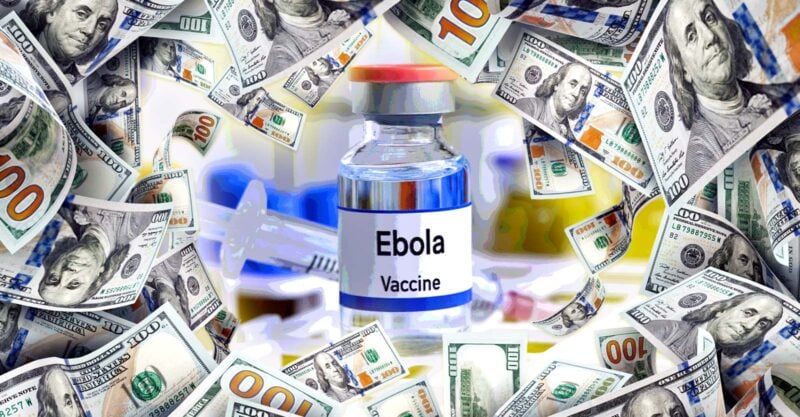


The Coalition for Epidemic Preparedness Innovations (CEPI), one of the organizations that helped fund COVID-19 vaccine development, today announced it will invest more than $60 million to accelerate development of experimental Ebola vaccines built on platforms similar to those used for the COVID-19 vaccines.
The funding comes as a rapidly growing outbreak of the Bundibugyo strain of the Ebola virus spreads in the Democratic Republic of Congo and neighboring Uganda.
According to reports cited by the Centers for Disease Control and Prevention, the outbreak in Congo has caused 282 confirmed cases and 42 deaths, along with 220 suspected cases. Uganda has confirmed nine cases, including one death.
CEPI said it will commit up to $50 million to support the development and testing of Moderna’s experimental Ebola Bundibugyo vaccine. Moderna’s Ebola vaccine is built on the same mRNA platform used for Spikevax, the company’s COVID-19 vaccine, BioSpace reported.
The organization also pledged up to $8.6 million for a vaccine developed by Oxford University and manufactured by the Serum Institute of India, and an initial $3.2 million for one developed by the International AIDS Vaccine Initiative.
There are currently no approved vaccines or treatments for the Bundibugyo strain of Ebola.
Ebola vaccine is ‘hijacking … the cell’s own genetic apparatus’
During an analysis of the CEPI announcement, medical commentator John Campbell, Ph.D., examined the Oxford-Serum Institute vaccine, which uses a modified version of the chimpanzee common cold virus, or adenovirus — the same basic platform used in the AstraZeneca COVID-19 vaccine.
“Similar technology was used in the Oxford-AstraZeneca vaccine, which caused so many side effects and severe adverse reactions,” Campbell said.
Campbell explained that the vaccine uses a genetically modified virus to deliver genetic instructions into human cells.
“It’s a bit like the RNA platform,” Campbell said. “But instead of using RNA lipid nanoparticles, this uses a virus to do it.”
Rather than injecting a viral protein directly, the vaccine prompts the body’s cells to produce an Ebola glycoprotein — a protein found on the surface of the Ebola virus that the immune system can recognize and target.
“So it’s hijacking or utilizing the cell’s own genetic apparatus. It’s not a traditional vaccine. The cell then produces its own antigen,” Campbell said.
He said the approach is “very similar” to COVID-19 vaccines because “both cause human cells to manufacture a viral antigen by giving … modified genetic information inside a virus that carries it into the cell.”
“This caused quite a few side effects, if you remember,” he said. “And we also know that it caused quite a few people to leave us permanently. But this is what is being used at the moment.”
AstraZeneca stopped producing the vaccine and began withdrawing its marketing authorizations worldwide in May 2024.

‘Something is clearly wrong with this picture’
Children’s Health Defense Chief Scientific Officer Brian Hooker said the Ebola vaccine effort raises concerns because it relies on technologies developed and deployed during the COVID-19 pandemic.
“The safety records of the Moderna and AstraZeneca COVID shots are poor at best,” Hooker told The Defender.
“These have killed millions of individuals worldwide, as these technologies are highly flawed and woefully undertested,” he said.
The vaccines failed to deliver on key promises, Hooker said.
“The other elephant in the living room is that neither shot was effective at reducing infection or transmission, and boosters actually increased the likelihood of individuals contracting the virus that they were supposedly protected from,” Hooker said. “Something is clearly wrong with this picture.”
Hooker also pointed to reports of DNA contamination in Moderna’s COVID-19 shots.
DNA contaminants “far eclipsing” U.S. Food and Drug Administration manufacturing requirements have been found in the Moderna shots, he said. “These fragments include DNA for the COVID spike protein. And I’m loath to think of anyone receiving a shot that had bits of DNA from the Ebola virus.”
‘This is another straw-grasping attempt to secure relevancy and funding’
Despite raising concerns about the technology, Campbell said Ebola presents a different risk-benefit calculation than COVID-19.
“COVID was a very minimally serious disease in many ways,” but the Bundibugyo strain of Ebola has a death rate of about 30%, he said. “We have to balance the risks there.”
Still, he argued that it is unlikely to become a worldwide crisis.
“There’s not going to be a pandemic of Bundibugyo virus,” Campbell said. “It’s not going to be a global pandemic because it’s spread by close person-to-person contact virtually exclusively.”
Others also questioned whether the virus poses a threat significant enough to justify a large-scale vaccine push.
Data scientist and immunology researcher Jessica Rose, Ph.D., wrote on X:
“This is yet another perfect example of a virus that is an exceedingly unlikely candidate in terms of global spread … precisely because it is easy to recognize … and to contain …
“… this is another straw-grasping attempt to secure relevancy and funding by certain entities and organizations.”
Safety risks and cover-ups continue to surround COVID vaccines
Concerns about the heightened push for an Ebola vaccine come amid continuing debate over COVID-19 vaccine safety and transparency.
According to OpenVAERS, 1,676,100 adverse events had been reported to the Vaccine Adverse Event Reporting System (VAERS) following COVID-19 vaccination as of April 24. Those reports included 39,099 deaths, 29,214 cases of myocarditis or pericarditis, and 18,016 reports of Bell’s palsy.
A national survey published in November 2025 found that roughly 1 in 10 vaccinated U.S. adults reported experiencing “major” side effects.
In March 2026, the CDC’s vaccine advisory committee planned to hear testimony from people who said they were injured by COVID-19 vaccines and discuss possible support measures. A federal judge later put the meeting on hold indefinitely.
Public comments submitted ahead of the meeting included nearly 1,170 statements, most describing injuries or deaths that commenters associated with COVID-19 vaccination.
The debate has extended beyond individual injury reports to broader questions about how vaccine safety data were analyzed and communicated.
In September 2025, scientists from CHD and the Brownstone Institute reanalyzed data from studies that had concluded COVID-19 vaccines were safe. The researchers said comparing relative risks across vaccine products revealed evidence linking some vaccines, including AstraZeneca, to significant health risks and suggested some earlier studies were “biased by design.”
In January, additional documents obtained through freedom of information requests in the U.K. raised further questions about vaccine safety oversight.
Records showed that the Medicines and Healthcare products Regulatory Agency received 48,472 reports in 2021 linking the AstraZeneca COVID-19 vaccine to heart-related adverse events. U.K. health authorities were aware of the reports, but continued to tell the public that the vaccine was safe and effective.
CEPI stresses speed, saying ‘every day counts in the race’ against Ebola
While critics point to unresolved questions surrounding COVID-19 vaccine safety and monitoring, CEPI said that rapid vaccine development is essential because no licensed vaccines currently exist for the Bundibugyo strain of Ebola.
The organization’s latest agreement expands an existing partnership with Moderna that began in late 2023 and focuses on Moderna’s mRNA platform, according to BioSpace.
CEPI, launched in 2017 at the World Economic Forum, was co-founded by the Bill & Melinda Gates Foundation, the Wellcome Trust and several government partners.
Dr. Richard Hatchett, CEPI’s CEO, told Reuters that vaccines could be ready for clinical trials within a matter of months.
“With Bundibugyo virus spreading rapidly and no licensed vaccines, every day counts in the race against this deadly disease,” Hatchett said in CEPI’s announcement. “CEPI’s urgent funding and support … aims to advance safe, effective vaccines to help control this epidemic.”
The Defender is 100% reader-supported. No corporate sponsors. No paywalls. Our writers and editors rely on you to fund stories like this that mainstream media won’t write. 

This article was funded by critical thinkers like you.
Serum Institute of India CEO Adar Poonawalla echoed that urgency in the CEPI press release. “At moments like this, speed, scale and access is all that matters,” Poonawalla said.
CHD Senior Research Scientist Karl Jablonowski said the statement sounded eerily similar to comments made during the COVID-19 pandemic, when Pfizer CEO Albert Bourla said the company was moving “at the speed of science.”
Jablonowski said a more important question is: What is the speed of safety?
Because U.S. law shields vaccine manufacturers from liability, companies can cut corners in favor of speed, without bearing the financial consequences if problems emerge, he said.
“If history is our teacher, this rapid deployment of experimental fast-tracked vaccines will not be accompanied by commensurate pharmacovigilance,” Jablonowski said. “They will be untracked and unaccountable shots in the dark.”
World Health Organization Director-General Tedros Adhanom Ghebreyesus welcomed the vaccine push.
“CEPI’s investment in three promising Bundibugyo virus vaccine candidates is an important step forward in our collective response,” he said in the press release.
CEPI is not the only organization ramping up its financial response to the outbreak. Gavi, the Vaccine Alliance recently pledged up to $50 million, while the World Bank’s Pandemic Fund announced up to $220.6 million in grant support.
Watch Campbell discuss the Oxford Ebola vaccine here:
Related articles in The Defender
- Ebola Was Identified Nearly 50 Years Ago — Why Are There No Treatments for the Latest Outbreak
- CHD Asks FDA to Revoke COVID Vaccine Licenses, Calls on Public to Submit ‘Hundreds of Thousands’ of Comments
- ‘We Keep Getting Pushed Aside’: Judge’s Ruling Shuts Down Testimony of People Injured by COVID Vaccines
- UK Health Officials Covered Up Reports of Heart Damage Linked to AstraZeneca Vaccine
- New Look at Old Data Shows COVID Vaccine Dangers Hiding in Plain Sight
