Login
Login
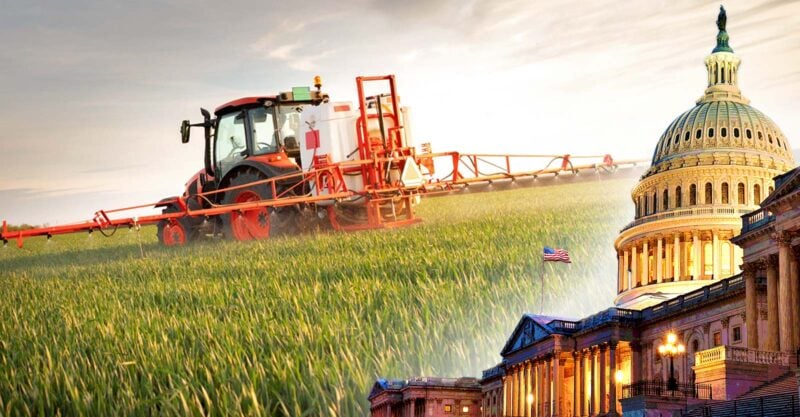


Federal lawmakers are being asked to consider two dueling pieces of legislation: one that protects the right of Americans to sue a pesticide maker if exposure to the company’s product harms their health, and one that protects chemical companies from those very types of lawsuits.
Sen. Cory Booker (D-N.J.) today introduced the Pesticide Injury Accountability Act of 2025. The proposed bill would amend the existing Federal Insecticide, Fungicide, and Rodenticide Act (FIFRA) law to ensure that agrochemical manufacturers can be held accountable if their products harm human health.
“If passed, the law would turn the tables on efforts by Bayer and a coalition of agricultural organizations as they push for state-by-state legislation blocking individuals from being able to file lawsuits in state courts accusing the companies of failing to warn of the risks of their products,” investigative reporter Carey Gillam wrote in The New Lede.
Meanwhile, on Tuesday, a U.S. House of Representatives subcommittee approved an appropriations bill with a clause that would make it more difficult for states to regulate pesticides or for people harmed by agrochemicals to sue the companies that make them, according to the Center for Food Safety.
The clause limits the use of federal funds to regulate pesticides by restricting regulators’ ability to create new rules or require warnings stronger than those already approved by the U.S. Environmental Protection Agency (EPA).
The House Appropriations Interior, Environment, and Related Agencies Subcommittee approved the clause during its mark-up session for the fiscal year 2026 bill, which authorizes $37.9 billion in funding for the EPA, the U.S. Forest Service and other agencies.
The bill will go to the full committee next week for approval. Experts expect that a similar provision will be included in the new Farm Bill.
If passed, the legislation would mean that labels for pesticides like glyphosate-based Roundup can’t be updated with new warnings — even when evidence shows risks — unless the EPA undertakes a new full review of the chemical under FIFRA or makes a new carcinogenicity classification. Either would take years, said Daniel Hinkle, an attorney with the American Association for Justice.
Bayer ordered to pay billions to settle pesticide lawsuits
Critics say the clause contained in the appropriations bill signals that the federal government wants to prevent states from requiring stricter labels than those approved by the EPA.
The regulations are part of a strategy by the pesticide industry, led by companies like Bayer (formerly Monsanto), to undermine the protections won over decades of organizing by food and environmental safety advocates to hold these companies accountable for the harms caused by their products through state regulations and lawsuits at the state level.
Over the last decade, thousands of lawsuits filed against Bayer for illness or injury caused by exposure to glyphosate — and similar lawsuits against other pesticide makers — have alleged the manufacturer failed to warn plaintiffs of health risks associated with their products.
Those “failure to warn” claims are based on state tort law and allege that Bayer knew or should have known about the risks and yet still failed to warn consumers, according to the National Agricultural Law Center.
Bayer has countered that the EPA rules trump state rules, and because the company’s labels meet the requirements of the EPA — which doesn’t classify glyphosate as a carcinogen or require other warning labels — the failure to warn claims are moot.
Some courts have ruled in favor of Bayer, but most have ruled against the chemical giant. In the process, Bayer has had to pay more than $10 billion to settle Roundup weedkiller lawsuits.
The U.S. Supreme Court has thus far declined to hear Bayer’s appeals, although it is considering one now.
Appropriations clause intended to ‘kill the lawsuits’
As the issue works its way through the courts, Bayer is lobbying state legislatures to pass laws that critics say give agrochemical companies a “liability shield.”
At least 12 and as many as 21 states are proposing industry-drafted bills to grant agrochemical companies immunity from liability for harms from their products if those products are licensed by the EPA, according to Moms Across America.
So far, Georgia and North Dakota have passed liability shield laws that declare the EPA has oversight of pesticide labeling and that state laws can’t hold the companies liable for failing to warn about anything not required by the EPA.
The EPA in January announced it was also advancing a proposal to block states from requiring warning labels on pesticides, herbicides and other commonly used agricultural products.
Center for Food Safety Policy Director Jaydee Hanson told The Defender that the language in the appropriations bill — language that likely will also show up in the Farm Bill — is intended to “kill the lawsuits.” Hanson said it is important to stop the legislation from moving forward.
Center for Food Safety, Beyond Pesticides, Stand for Health Freedom and Children’s Health Defense (CHD) are seeking to have the clause removed from the appropriations bill before it goes before the full committee next week.


This article was funded by critical thinkers like you.
The Defender is 100% reader-supported. No corporate sponsors. No paywalls. Our writers and editors rely on you to fund stories like this that mainstream media won’t write.
Booker aims to ensure ‘chemical companies can be held accountable … for harm caused by their toxic products’
Booker’s Pesticide Injury Accountability Act explicitly states that it does not preempt state law.
However, if people are unable to bring their lawsuits in state courts because of liability shields, the proposed legislation gives them the right to bring a case in federal court.
A summary of the bill calls out Bayer and Syngenta, which makes paraquat, a weedkiller linked to Parkinson’s disease.
Booker said his proposed bill was a direct response to the liability shield that Republican lawmakers are attempting to push through.
“Rather than providing a liability shield so that foreign corporations are allowed to poison the American people, Congress should instead pass the Pesticide Injury Accountability Act to ensure that these chemical companies can be held accountable in federal court for the harm caused by their toxic products,” he said in a statement announcing the bill.
The statement also quoted CHD CEO Mary Holland, who said:
“CHD opposes any liability shield for any industry that has a direct impact on the health of the American people. Granting blanket immunity to corporations who have a fiscal responsibility to their shareholders, and not a responsibility to consumer safety, is one of the most dangerous propositions imaginable. CHD sincerely thanks Senator Booker for his leadership in sponsoring this critical piece of legislation to protect the American people over corporations.
“We have already seen with the National Childhood Vaccine Injury Act of 1986 how unfettered immunity incentivizes corporations to minimize safety concerns while also increasing their push to market products. That law granted unconditional immunity to the vaccine manufacturers which led to a massive increase in the number of vaccines children are required to take while safety concerns have been marginalized.”
Related articles in The Defender
- Just Like Pharma? Bayer Lobbies for Liability Shield After Juries Side With People Harmed by Pesticides
- Congress Must Reject Monsanto-Bayer Plan to Avoid Liability for Poisoning Humans, Environment
- Which States Are Rushing to Pass Laws to Protect Big Chemical From Pesticide Lawsuits?
- Industry-friendly Laws Could Mean More Chemicals in Food Production — and Trouble for the MAHA Agenda