Login
Login


By Pamela Ferdinand
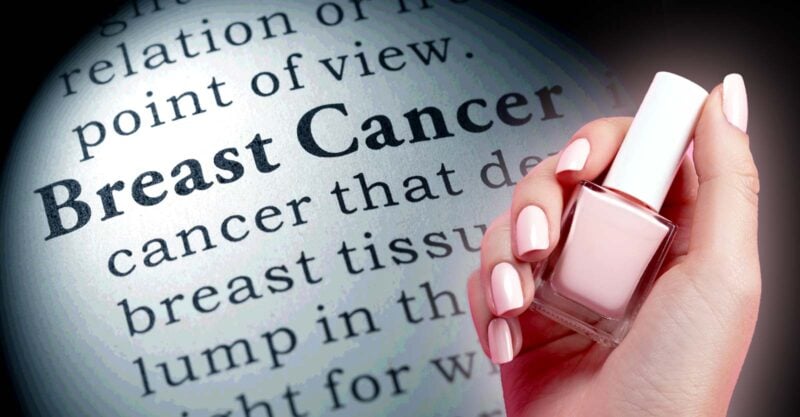
Common chemicals in plastics, personal care products, and food packaging may drive the onset, growth, and spread of breast cancer — the second-leading cause of cancer deaths in women, new research suggests.
Breast cancer is one of the most common and deadly cancers worldwide, causing more than 42,000 deaths in the U.S, with particularly high rates among Black women. Only 5-10% are inherited, meaning most arise from environmental and lifestyle factors.
The findings, published in September in Ecotoxicology and Environmental Safety, suggest phthalates hijack the body’s hormone systems, activate cancer-promoting genes, make tumors easier to form and harder to treat.
The study raises new questions about the safety of chemicals that millions of Americans encounter every day in air, food and water.
“Phthalates are pervasive environmental toxicants that influence the initiation, progression and metastasis of breast cancer,” said the scientists, led by Dr. Michal Toborek at the University of Miami’s Leonard M. Miller School of Medicine.
“As a breast tumor progresses through the stages of disease–intensified by the effects of phthalate exposure on hormone activity, drug resistance, metabolic dysfunction, and cancer cell stemness–the tumor and its surrounding microenvironment become more aggressive, ultimately leading to possibly fatal outcomes.”
The review also points to stark regulatory contrasts: The European Union (EU) has restricted several phthalates under its REACH framework.
Meanwhile, the U.S. has banned only a handful in children’s toys and still allows phthalates in most food packaging and personal care products. Phthalates may also be an undisclosed component of artificial fragrance.
How everyday products may fuel breast cancer risk
Phthalates — added to plastics to make them more flexible and durable — are present in a vast range of consumer and industrial goods, from nail products and perfumes, body sprays and colognes to building materials, pharmaceuticals and food packaging.
The new study highlights significant ways they may drive breast cancer:
- Activate cancer pathways: Phthalates can overstimulate cell signaling systems, allowing cancer cells to expand and spread.
- Promote tumor genes: Phthalates boost genes that drive cancer while blocking the body’s normal process of clearing damaged cells.
- Act like estrogen: By mimicking the hormone, which is known to drive many breast cancers, phthalates can disrupt cellular signals and trigger uncontrolled cell division.
- Make tumors more aggressive: They trigger changes that help cancer cells invade distant organs (metastasis), which drives most cancer deaths. They also spur angiogenesis — the growth of new blood vessels that feed tumors — making cancer even harder to control.
- Weaken cancer treatments: A common plasticizer, DEHP, has been shown in lab studies to reduce the effectiveness of chemotherapy drugs such as paclitaxel, doxorubicin and tamoxifen.
- Disrupt metabolism: Higher phthalate levels have been linked to increased body mass index (BMI), suggesting these chemicals disrupt metabolism and heighten breast cancer risk. Phthalates may also amplify changes in how cells use energy (the “Warburg effect”), fueling tumor growth.
- Boost breast cancer stem cells: Even low phthalate levels can strengthen these aggressive cells that make tumors more likely to spread, resist therapy and recur.
Real-world exposure suggests cancer links
Though fewer in number than lab experiments, human studies support some of these findings. One study found that women in Denmark with high exposure to dibutyl phthalate — used in nail polish, perfumes and hair sprays — had nearly double the risk of developing the most common type of breast cancer (estrogen receptor (ER)-positive breast cancer).
In another study, women who stopped using phthalate-containing personal care products for 28 days had lower urinary levels of the chemicals. The study also showed a reversal in the activity of cancer-related genes in breast tissue.
Endocrine disruptors like phthalates, bisphenol A (BPA) and per- and polyfluoroalkyl substances (PFAS or “forever chemicals”) interfere with hormonal signals that regulate the body.
Among other serious health issues, they have been tied to adverse birth outcomes, asthma, cardiovascular disease, cognitive decline, obesity and reproductive health problems.
Breast cancer mainly develops in middle-aged and older women. But because breast tissue is highly hormone-sensitive, younger women — especially those ages 18 to 34 — are considered at higher risk due to their heavier use of personal care and hair products that contain endocrine disruptors, the researchers say.
Hundreds of such chemicals have been detected in breast tissue from multiple environmental sources.
Researchers call for more realistic, long-term studies
Important questions remain, the study’s authors say. Many lab studies use higher doses than typical real-life exposures, while human studies often rely on short-term urine samples that don’t reflect lifetime risk.
Most research also depends on animal models and two standard breast cancer cell lines, which fail to capture the diversity of real tumors.
And exposure rarely occurs in isolation: People are also in contact with BPA, parabens and other hormone disruptors that may act together in complex ways.
The authors call for larger, long-term studies tracking exposure from before birth into adulthood. Three-dimensional breast tissue models and monitoring biomarkers of hormone activity, oxidative stress and genetic changes could also better connect lab results to health, they say.
“Understanding phthalate-driven carcinogenicity, and how to mitigate it, is essential to inform public health policy, clinical guidance, and individual risk reduction methods.”
To help reduce your exposure to phthalates:
- Choose glass or stainless steel food and beverage containers.
- Avoid products made from polyvinyl chloride (PVC) vinyl or labeled with recycling symbol #3.
- Do not heat plastic (e.g., in the microwave or dishwasher).
- Opt for fresh, whole foods and avoid ultra-processed and packaged foods.
- Use fragrance-free and phthalate-free personal care products, household cleaners, and other items.
Originally published by U.S. Right to Know.
Pamela Ferdinand is an award-winning journalist and former Massachusetts Institute of Technology Knight Science Journalism fellow who covers the commercial determinants of public health.