Login
Login


An Attack on Patients’ Right to Informed Consent
For many years, the manufacturer of Fosamax did not inform patients of a known, important adverse reaction to their drug: an atypical femoral fracture (AFF). The thigh bone (femur) can break spontaneously, with no warning and usually during a low-impact movement, like walking or standing up. These injuries usually require surgery.
A class action lawsuit has been winding its way through the courts that addresses the question if those patients who experienced the AFF have the right to sue. This case about the claim that Merck failed to warn about AFF reaches past this suit to potentially change pharmaceutical companies’ relationship with the FDA. The case is Merck Sharp & Dohme Corp., V. Doris Albrecht, et.at. The case was scheduled to be heard in Philadelphia in the Court of Appeals for the Third Circuit on March 5.
Fosamax belongs to a class of drugs called “bisphosphonates,” which are commonly used to treat osteoporosis. Respondents, in this case, are patients who allege that Fosamax (alendronate sodium) caused them to suffer atypical femoral fractures, which are incapacitating fractures that result from little or no trauma in which the thigh bone often breaks in two.
Fosamax was approved by the FDA in 1995 to treat osteoporosis. Records show that Merck, the manufacturer of Fosamax, received reports of atypical femoral fractures as early as 1999; and subsequent articles, case studies, and reports continued for several years. With this information, Merck could have added a warning through either of two processes without FDA permission as provided for in The Federal Food, Drug, and Cosmetic Act (outlined in the amicus curiae). But, Merck did not act for nine years.
Novo Valuation Surpasses Tesla on Experimental Obesity Drug Data
Novo Nordisk (NOVOb.CO) on Thursday surpassed Tesla Inc (TSLA.O) in market valuation after the maker of the popular weight-loss drug Wegovy announced positive early trial data for a highly anticipated new obesity drug.
Shares surged more than 8% to record highs, shooting Novo Nordisk up in global rankings to the 12th most valuable company from 14 previously after it told investors a Phase I trial of the pill version of experimental drug amycretin showed participants lost 13.1% of their weight after 12 weeks.
That compares to a weight loss of about 6% after 12 weeks and 15% after 68 weeks in trials for Wegovy, its blockbuster obesity drug.
Investors welcomed the news as indicating Novo had more in its pipeline beyond its hugely successful Wegovy. Its shares have soared since launching the weekly injections in the United States in 2021.
Bayer Notches More Wins in Roundup Weedkiller Cancer Trials
Bayer (BAYGn.DE) on Tuesday said it won a trial in a lawsuit brought by a retired postal service worker in Pennsylvania who alleged he developed non-Hodgkins lymphoma from using the company’s Roundup weedkiller.
In addition to the jury verdict in the Philadelphia Court of Common Pleas, Bayer said a California farmer, who said he contracted the same type of cancer from exposure to the product, and his wife on Tuesday voluntarily dropped their lawsuit while a trial was underway in the in state court in Sonoma County, California.
Scott Love, a lawyer for Carl Kline, the plaintiff in the Pennsylvania case, said the jury had not been allowed to hear key evidence, including a finding by a World Health Organization body that glyphosate, Roundup’s active ingredient, was likely capable of causing cancer.
Tuesday’s victories come on the heels of another trial win for the company in Arkansas on Friday. Bayer has now prevailed in 13 of the last 20 Roundup trials, while plaintiffs have scored large verdicts totaling more than $4 billion, including $2.25 billion in a single case in January.
Big Pharma Is ‘Coming to the Table’ on Price Negotiations as It Loses in Court
Federal health officials this week trumpeted progress in negotiating lower Medicare drug prices as big pharmaceutical companies faced another legal loss in their efforts to have the negotiations ruled unconstitutional.
This week, the Department of Health and Human Services announced that it had received the first counteroffers from pharmaceutical makers for all 10 drugs up for price negotiation. The negotiations — a provision in the Inflation Reduction Act of 2022 — kicked off late last year with the Centers for Medicare and Medicaid Services (CMS) announcing the 10 drugs selected for bargaining.
Those 10 drugs have seen significant price hikes over recent years and, combined, cost Medicare $50.5 billion in gross during 2022, with an additional $3.4 billion in out-of-pocket costs for patients. The health department sent its opening pricing offers to drug makers on February 1.
But while the big pharmaceutical companies are at the bargaining table, they’re also in the courts trying to get judges to strike down the negotiations as unconstitutional. The pharmaceutical industry has filed at least nine lawsuits around the country challenging the negotiations. So far, it’s not going well.
Biden Speech Again Seeks Credit on Drug Prices
President Biden will use Thursday night’s State of the Union address to again claim credit for lowering Americans’ drug costs — something the public just isn’t willing to concede.
Why it matters: While policies around cheaper medicines poll extremely well with voters, Biden hasn’t been able to squeeze political juice from Medicare price negotiations, out-of-pocket caps and other policies on his watch.
An AP-NORC poll in the fall found less than half of Americans approved of Biden’s handling of drug prices even though a majority supported Medicare negotiations.
Biden can portray himself as a fighter who took on powerful pharmaceutical interests and won, even though the industry is trying to overturn price negotiations in multiple courts.
Babies in WA Will Soon Be Immunized Against RSV — but Not With a Vaccine
This week, Western Australia announced a state government-funded immunization program against respiratory syncytial virus (RSV). It’s the first Australian state or territory to do so.
All babies under eight months old and those aged eight to 19 months at increased risk of severe RSV infection will be eligible for immunization in WA this year.
But this immunization differs from other routine childhood vaccines. The other passive immunization strategy relies on manufactured long-acting antibodies (known as “monoclonal antibodies”), which can be delivered by injection to young children.
This is what will be offered in WA. Nirsevimab (also known as Beyfortus) is a long-acting antibody that Australia’s Therapeutic Goods Administration (TGA) approved in November 2023.
After Decades of Failures, Researchers Have Renewed Hopes for an Effective HIV Vaccine
Despite 20 years of failures in major HIV vaccine trials — four this decade alone — researchers say recent scientific advances have likely, hopefully, put them on the right track to develop a highly effective vaccine against the insidious virus. But probably not until the 2030s. All current HIV vaccine action is in the laboratory, animal studies or very early human trials.
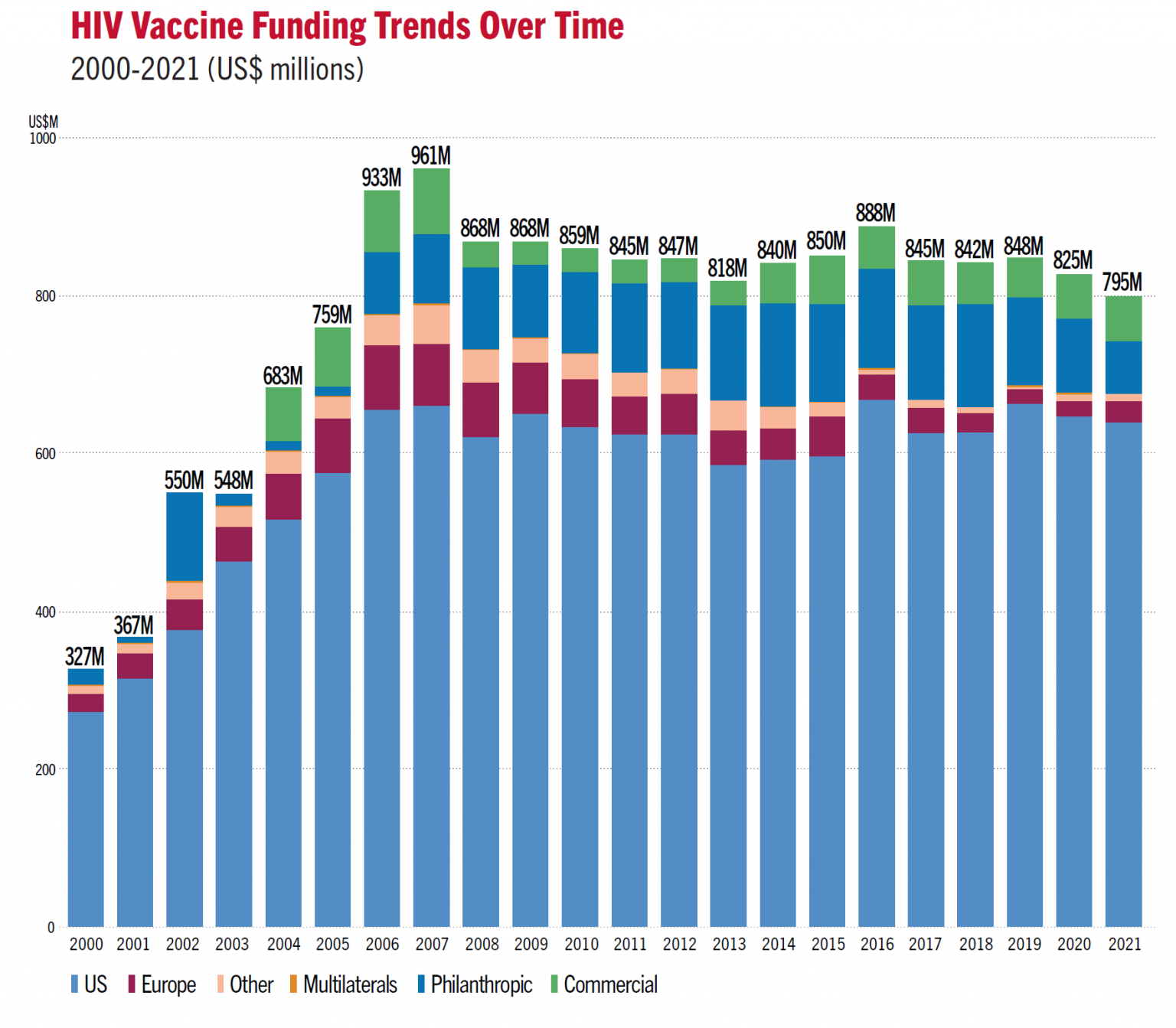
The cost has already been immense. Nearly $17 billion was spent worldwide on HIV-vaccine research from 2000 to 2021. Nearly $1 billion more is spent annually, according to the Joint United Nations Program on HIV/AIDS and the nonprofit HIV group AVAC.
“Maintaining the funding for HIV vaccines right now is really important,” said Dr. Nina Russell, who directs HIV research at the Bill & Melinda Gates Foundation. She pointed to the field’s own “progress and the excitement” and to how “HIV vaccine science and scientists continue to drive innovation and science that benefits other infectious diseases and global health in general.”
Case in point: COVID. Thanks to HIV research, the mRNA vaccine technology was already available in 2020 to speed a coronavirus vaccine to market.
Latest J&J Talc Trial Ends With Hung Jury
The latest trial over claims that Johnson & Johnson‘s (JNJ.N) talc products cause cancer ended in a mistrial on Tuesday, as a Florida state court jury said it could not agree on a verdict.
The lawsuit was brought by Bob Sugarman, who said that J&J’s talc-based baby powder led his wife to develop ovarian cancer and die from the disease. J&J said in a statement after the mistrial that its baby powder “is safe, does not contain asbestos and does not cause cancer.”
Lance Oliver, a lawyer for Sugarman, said the verdict was “disappointing” but that it was “part of the system,” and that he expected the case would be retried in the near future.
J&J faces more than 50,000 lawsuits over talc, most by women with ovarian cancer, with a minority of the cases involving people with mesothelioma, a type of cancer associated with asbestos exposure.
The cases were on hold for about two years after J&J attempted to resolve its talc liabilities in bankruptcy court, where it proposed to settle all current and future cases for $8.9 billion. However, federal courts dismissed two separate bankruptcy filings, allowing litigation to resume last year.
Whistleblower’s Decades-Long Fight to Save Patients From Dangerous Research
Nancy Olivieri chose to safeguard patients rather than protect her career when she blew the whistle on a drug trial she was leading. She tells The BMJ of her nearly 30-year fight for transparency and safety and why it will probably never be over.
In 1982, while still a research fellow at Toronto’s Hospital for Sick Children, Nancy Olivieri began working with children with the common inherited blood disorder thalassaemia major, who are at risk of toxic iron overload as a result of monthly transfusions. In 1988 and 1992 Olivieri launched two clinical trials supported by the Medical Research Council of Canada to evaluate the effectiveness of a new drug, deferiprone, in removing body iron. Early results were promising, but during extended exposure to the drug, concerns arose of ineffectiveness and toxicity.
Raising her concerns with her funders, Olivieri wanted to help protect the patients by informing them of the findings. But she was threatened with legal action by Barry Sherman, then chief executive of the Canadian drug company Apotex, which makes deferiprone and which had recently begun to provide partial funding for her second trial.
Both trials were also abruptly terminated, after the invocation of a “confidentiality clause” in the trial contract that had been approved by the hospital’s research institute. Olivieri published her findings in the New England Journal of Medicine.