Login
Login
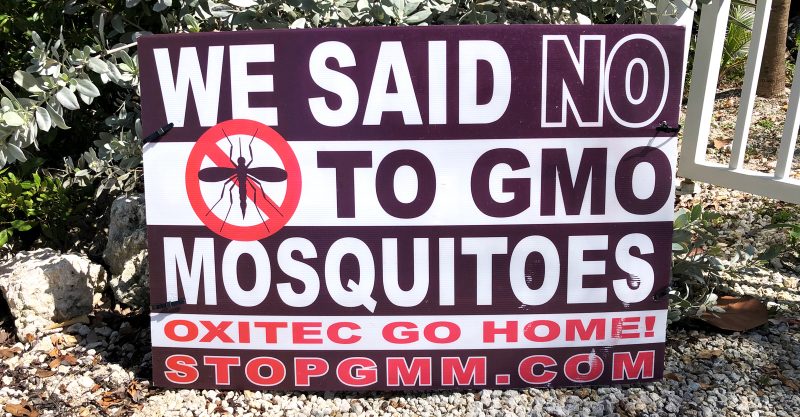


In defiance of science and public health concerns, Monday the Environmental Protection Agency (EPA) approved the mass release of billions of experimental genetically engineered (GE) mosquitoes into the U.S.’ most populous and agriculturally significant states.
The British biotechnology company Oxitec was granted an experimental use permit for the release of a genetically engineered version of the species Aedes aegypti across Fresno, Tulare, San Bernadino and Stanislaus Counties in California and in Monroe County in Florida.
This will be the biggest release of GE insects in the world.
EPA’s approval came despite growing concerns raised by scientists, public health experts and environmental groups about potential impacts of the experimental releases on public health, the environment and endangered species.
No publicly available data supports Oxitec’s claims that GE mosquitoes will reduce incidence of mosquito-borne diseases.
An independent peer-reviewed study from Yale University scientists revealed that over two years of continual releases of the GE mosquitoes at a test site in Brazil failed to reduce populations of Aedes aegypti.
The Yale study also found that the GE mosquitoes bred with local Aedes aegypti, resulting in hybrid mosquitoes in the wild that may be more aggressive, more difficult to eradicate and may increase the spread of mosquito-borne disease.
“Scientists have found genetic material from GE mosquitoes in wild populations at significant levels, which means GE mosquitoes are not sterile. GE mosquitoes could result in far more health and environmental problems than they would solve,” said Dana Perls, food and technology program manager at Friends of the Earth, and a California resident.


“EPA needs to do a real review of potential risks and stop ignoring widespread opposition in the communities where releases will happen.”
The experimental release will purportedly investigate whether the GE mosquito can reduce the population of Aedes aegypti mosquitoes — one species that can carry yellow fever, dengue, chikungunya and Zika.
However, California does not have any cases of these diseases, as reported by the Centers for Disease Control and Prevention. In addition, the Aedes aegypti mosquito is not prevalent in California.
“This experiment is unnecessary and even dangerous, as there are no locally acquired cases of dengue, yellow fever, chikungunya or Zika in California,” said Jaydee Hanson, policy director for the International Center for Technology Assessment and Center for Food Safety.
”Releasing billions of GE mosquitoes makes it likely that female GE mosquitoes will get out and create hybrid mosquitoes that are more virulent and aggressive. Other public health strategies, including the use of Wolbachia infected mosquitoes, could better control the Aedes aegypti in California and Florida.”
The EPA did not publicly release any data from Oxitec field trials in Florida or Brazil and key information about health effects, including allergenicity and toxicity, was redacted from the company’s application for a permit.
EPA did not require key scientific assessments, including an endangered species assessment, public health impact analysis or caged trials ahead of any environmental release. The EPA declined to convene a Scientific Advisory Panel as it does for other new pesticides.
“Once released into the environment, genetically engineered mosquitoes cannot be recalled,” said Dr. Robert Gould, president of San Francisco Bay Physicians for Social Responsibility and California resident. “Rather than forge ahead with an unregulated open-air genetic experiment, we need precautionary action, transparent data and appropriate risk assessments.”
Despite strong public opposition, in April 2021, Oxitec and the Florida Keys Mosquito Control Board began the release of half a billion genetically engineered mosquitoes into Monroe County, Florida.
Neither the mosquito control board nor Oxitec informed community residents about the locations of release until three days beforehand, and there was no informed consent by affected community members prior to release.
Following the EPA’s approval, California’s Department of Pesticide Regulation and local mosquito abatement districts will also decide whether to approve the permit for release.
If approved, billions of GE mosquitoes will be released over a 2-year period in 4 counties in California, beginning in 2022, and the current GE mosquito release in Monroe County, Florida, will be extended for another 2 years.