Login
Login
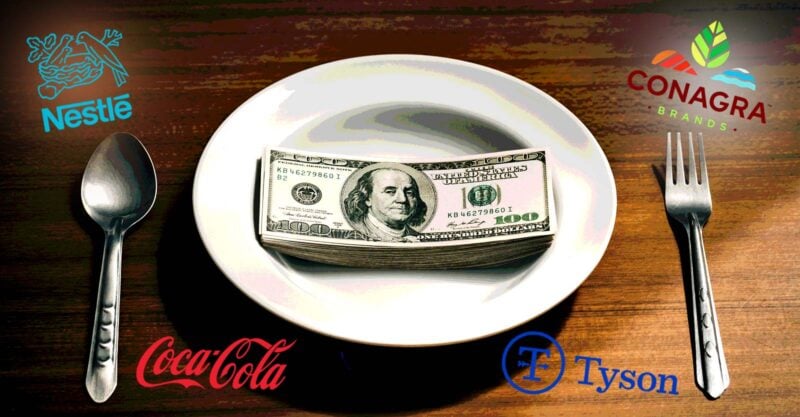


Some of the largest global food conglomerates and their lobbyists are jumping on the “Make America Healthy Again” (MAHA) bandwagon, claiming to support national standards for ingredient transparency.
But critics warn the group’s real goal is to block states from passing their own food safety laws.
“The MAHA vision represents a return to accountability and authentic transparency in food and health policy,” said Sayer Ji, chairman of the Global Wellness Forum and founder of GreenMedInfo. “It’s what the people have been demanding — and what Big Food fears most.”
The new group — Americans for Ingredient Transparency (AFIT), launched earlier this week — is calling for uniform food labeling standards across the U.S. The group proposes amending the Federal Food, Drug, and Cosmetic Act to make the U.S. Food and Drug Administration (FDA) the sole authority over food and beverage regulations — a move that would strip states of the right to enact their own, potentially stricter, rules.
AFIT says this approach would ensure “consistent, science- and risk-based principles” and give consumers confidence in the safety of food, beverage and personal care products, Fox News reported.
“Americans want to know that the ingredients in the products they’re buying for their families are safe,” said Andy Koenig, AFIT’s senior adviser and a former special assistant to President Donald Trump.
But critics like Mary Holland, CEO of Children’s Health Defense, warned the group “is a sneaky astroturf organization attempting to hijack the MAHA movement.”
Holland said Big Food, including Coca-Cola, Tyson Foods, Nestle and Conagra, has “banded together to preempt strict state food labeling laws.” Similar efforts in other industries have harmed public health and safety, she said.
“The U.S. constitutional system depends on checks and balances, including between the federal government and states,” Holland said. “People who demand healthy food and honest labeling should oppose this deceptive maneuver.”
According to Food Business News, AFIT’s backers also include PepsiCo, Kraft Heinz, Hormel Foods, Sysco, the Consumer Brands Association, the Meat Institute, the National Restaurant Association, the National Retail Federation, FMI-The Food Industry Association and the American Beverage Association.
“AFIT is not what it appears to be,” Ji said.“This coalition is a calculated PR effort designed to look like consumer advocacy while advancing the interests of multinational food corporations.”
Ji said AFIT’s “real aim is to weaken or preempt the growing wave of state-level food safety laws by replacing them with a single, industry-friendly federal standard that shields companies from accountability.”
‘States have always led the way’ on food safety legislation
According to AFIT, a “uniform national standard” for labeling food and beverage products would “ensure ingredient safety that benefits all Americans.”
A federal standard would eliminate what AFIT calls a “confusing patchwork for food and beverage regulation,” referring to food safety laws that differ from state to state.
“Unfortunately, states are now implementing their own patchwork of contradictory ingredient rules that have caused widespread confusion among consumers,” Koenig told Fox News.
But on her blog, author Vani Hari, also known as the “Food Babe,” said AFIT’s goal “is to undermine all of the Governors who have bravely enacted state legislation to get chemicals out of our food.”
Ji agreed. He said:
“The so-called ‘patchwork’ of state policies they complain about is actually one of the great strengths of our democracy.
“Under the 10th Amendment, states have both the authority and the responsibility to protect their citizens when federal agencies fail to do so. And that’s exactly what we’ve seen in recent years: a historic rise in effective, citizen-driven legislation.”
Hari said AFIT’s efforts come as dozens of states have pending bills to ban harmful food chemicals, and several states have already passed “historical legislation.”
Newly passed state legislation includes a West Virginia law banning artificial dyes and other chemical food additives, a California law that removes ultraprocessed foods from school lunches, and a Texas law requiring warning labels on food ingredients banned in other countries. Louisiana passed a similar law.
“If there were truth-in-labeling laws governing the naming of campaigns, this coalition would be prohibited from disguising their true intention, which is to wipe out all of the state laws that protect consumers from harmful chemical ingredients in food and hold the industry accountable,” Brian Ronholm, director of Food Policy for Consumer Reports, said in a statement.
AFIT’s launch also comes a month after a MAHA Commission report released by the Trump administration named ultraprocessed foods as a key contributor to the chronic disease epidemic among U.S. children. The FDA announced in April that it would phase out several artificial dyes.
Hari noted that “it would be a logistical nightmare” for major food manufacturers to comply with ingredient or labeling restrictions that are in force in just one state.
“This is why food corporations will really need to make the changes nationwide to comply with one state’s regulations,” Hari wrote.
“We would certainly advocate for consistency across the country,” John Murphy, Coca-Cola’s chief financial officer, told Bloomberg. “You can imagine the intricacies of dealing with a variety of different requirements state by state.”
Scott Faber, senior vice president of Government Affairs for the Environmental Working Group, said Big Food is “fighting for the right to sell us food filled with toxic chemicals — food they can’t sell to consumers in other nations.”
According to Faber, toxic ingredients and additives that some U.S. states have recently banned are already banned by other countries. Yet, the same companies continue to produce products that are marketed in those countries, “just without the chemicals we hate.”
Zen Honeycutt, founding executive director of Moms Across America and the Moms Across America Movement, said AFIT “is a giant red flag to the MAHA movement.” Big Food used the same tactic to prevent the labeling of products containing genetically modified organisms (GMOs). She said:
“We have seen this before, when the Grocery Manufacturers Association spent $100 million to prevent GMO labeling. They pushed the ‘Safe and Accurate Food Labeling Act of 2015’ to eliminate state rights and pass a watered-down federal law that essentially stopped GMO labeling.
“Since then, our chronic health issues, which can be connected to eating GMO ultra-processed junk food, have skyrocketed.”
“States have always led the way when it comes to the safety of our food and everyday products,” Faber said. “States are leading the way, and they are keeping the pressure on the FDA to finally do the job Congress gave the FDA in 1958.”


This article was funded by critical thinkers like you.
The Defender is 100% reader-supported. No corporate sponsors. No paywalls. Our writers and editors rely on you to fund stories like this that mainstream media won’t write.
Coalition wants Big Food to ‘decide whether food chemicals are safe’
AFIT’s website lists three reforms the coalition supports:
- “Front-of-package labeling” standards, that would require a national “front-of-package nutrition labeling system that guides consumers to healthier choices.”
- “QR code reform” that would require the placement of QR codes on food packaging nationwide, allowing “consumers to scan and instantly access product information.”
- “Generally Recognized as Safe (GRAS) reform” — described as “Federal legislation to provide a nationally uniform regulatory approach for new ingredients used in food and beverage products.”
Under current GRAS regulations, the FDA allows food manufacturers to self-certify the safety of many food ingredients.
In a May interview with The Defender, Kendall Mackintosh, a board-certified nutrition specialist and member of the “MAHA Moms” movement, said, GRAS has “allowed food manufacturers to self-certify safety without FDA review or public disclosure.”
“There has been little to no post-market surveillance of chemicals once approved,” Mackintosh said.
In May, the FDA announced the launch of a “stronger, more systematic review process for food chemicals” — a move the agency described as a “major step to increase transparency and ensure the safety of chemicals in our food.”
Julie Gunlock, director of the Independent Women’s Network and co-leader of AFIT, told Fox News such national standards would protect families and children.
“Families deserve commonsense and science-backed transparency they can rely on. That’s why a national standard for food safety and labeling is of the utmost importance to ensure every parent can make safe, informed choices for their children — because protecting our families starts with the truth,” Gunlock said.
According to Food Business News, Gunlock has previously worked for several governors and members of the U.S. Congress and is the author of the book, “From Cupcakes to Chemicals: How the Culture of Alarmism Makes Us Afraid of Everything and How to Fight Back.”
Hari characterized Gunlock as “a long-time pro-chemical, pro-GMO, pro-industry, and pesticide-loving apologist,” citing some of Gunlock’s social media posts. Hari said Gunlock’s book mocks Americans who care about harmful chemicals in our food.
Faber said that eliminating states’ ability to enact standards that are stricter than those historically enforced by the FDA would allow “food chemical companies to decide whether food chemicals are safe.”
“The FDA rarely reviews the safety of the food chemicals we’re already eating. Many of the chemicals we’re already eating have not been reviewed for safety by the FDA for decades — if ever,” Faber said.
“If these companies truly cared about transparency, they’d be reformulating products instead of spending millions on lobbyists and PR firms to blur the truth,” Ji said.
Widespread publicity of AFIT’s efforts came during the same week that The Associated Press published a series of articles criticizing the efforts of MAHA-aligned organizations to support state-level legislation on several issues, ranging from vaccines to food safety.
Ji said the “timing of this coalition’s launch — coinciding with a series of coordinated media attacks on MAHA, [U.S. Health Secretary Robert F. Kennedy Jr.] and allied initiatives — is no accident. It’s a strategic effort to suppress a populist movement that’s winning on substance and public trust,” Ji said.
Gunlock did not respond to The Defender’s request for comment by press time.
Related articles in The Defender
- ‘Science Is on Our Side’: Critics Fire Back at AP Report on ‘Wave of Anti-Science Bills’
- MAHA Commission Outlines Sweeping Agenda to Target Chronic Disease
- ‘Not Fit for Human Consumption’: Texas Could Require Warning Labels on Popular Snack Foods
- RFK Jr.: MAHA Report a ‘Clarion Call’ to End the Chronic Disease Epidemic
- FDA to Tighten Review Process for Chemicals in Food
- ‘Always Listen to the Mom’: U.S. to Phase Out Artificial Dyes Used in Food Products