

 Login
Login
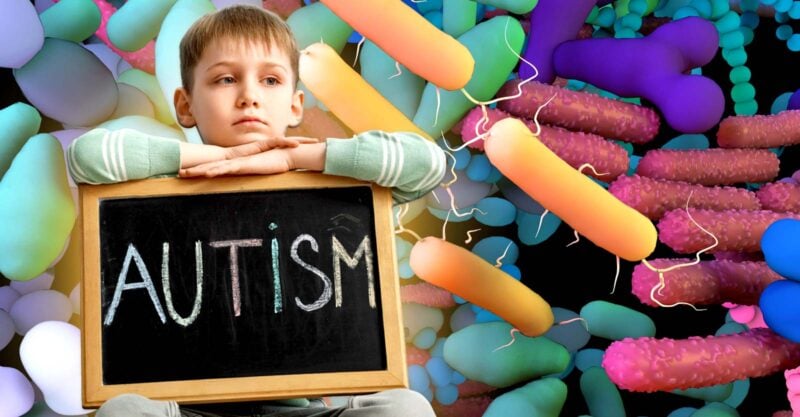


A comprehensive review led by Yan Zeng and colleagues at Deyang People’s Hospital in Sichuan, China, has synthesized a decade of research examining how the gut microbiome may influence autism spectrum disorder (ASD).
Published in Frontiers in Neuroscience, the review analyzed observational studies, meta-analyses, animal experiments, and early clinical trials published between 2016 and 2026. The authors conclude that children with ASD consistently exhibit alterations in gut bacteria, microbial metabolites, immune signaling and gastrointestinal function.
While the evidence supporting a biological gut-brain connection has grown considerably, the review also emphasizes that microbiome-based therapies — including probiotics and fecal microbiota transplantation (FMT) — remain experimental and require larger, well-controlled clinical trials before entering routine care.
A decade of research points to consistent patterns
This narrative review systematically evaluated studies involving children with autism, animal models, microbiome sequencing, metabolomics, immune profiling and early intervention trials.
Across many populations, researchers repeatedly identified reduced levels of beneficial bacteria such as Bifidobacterium and Akkermansia muciniphila, alongside increases in Clostridium, Bacteroides and Escherichia-Shigella.
These microbial shifts were associated with lower production of short-chain fatty acids — particularly butyrate — altered serotonin metabolism, increased inflammatory cytokines including TNF-α and IL-6, and gastrointestinal symptoms that frequently accompany autism.
Perhaps the strongest mechanistic evidence comes from animal studies.
Germ-free mice receiving fecal microbiota from children with ASD developed autism-like behaviors and abnormalities in serotonin signaling, suggesting that gut microbes may play a causal role in at least some biological pathways underlying the disorder. However, translating these findings to humans remains far more challenging.


Therapies show promise — but evidence remains preliminary
Several early clinical studies reviewed reported improvements in gastrointestinal symptoms and, in some cases, behavioral measures following FMT, probiotics, dietary modification or prebiotic supplementation.
One frequently cited open-label microbiota transfer study found approximately an 80% reduction in gastrointestinal symptoms with sustained improvement over two years. Yet the authors caution that most human studies remain small, lack placebo controls or use open-label designs.
Notably, the only controlled FMT study reviewed failed to meet its primary autism behavioral endpoint despite showing improvements in several secondary outcomes.
Red flags & limitations
The review highlights substantial heterogeneity across autism microbiome research. Diet, antibiotic exposure, geography, age, sex, sequencing methods and gastrointestinal symptoms all influence gut microbial composition, making it difficult to define a single “autism microbiome.” Most studies remain observational, preventing firm conclusions about cause and effect in humans.
According to the TrialSite Human Consequence Index, the work underscores growing interest in less invasive, personalized interventions but also reinforces the importance of avoiding premature clinical adoption.
From a Pluralism Index perspective, the authors acknowledge conflicting findings, encourage standardized protocols and call for larger multicenter trials with greater transparency and data sharing.
What It means
This review represents one of the most comprehensive syntheses of autism-gut microbiome research published to date. The biological evidence linking gut dysbiosis with autism has become increasingly compelling, particularly through converging findings involving microbial metabolites, immune signaling and experimental animal models.
Pioneers on the front lines such as Dr. Sabine Hazan at Progenabiome, in Southern California, continue to investigate while a growing number of academic medical centers build centers of excellence in this nascent branch of medical science.
However, evidence supporting microbiome-based treatments in children remains moderate at best. Future randomized, placebo-controlled trials will determine whether modifying the gut microbiome can become a reliable component of autism care rather than simply an intriguing biological hypothesis.
Originally published by TrialSite News.
