Login
Login



By Cristina Andrade-Feraud and Diana Azzam
Arsenic is a naturally occurring element found in the Earth’s crust. Exposure to arsenic, often through contaminated food and water, is associated with various negative health effects, including cancer.
Arsenic exposure is a global public health issue.
A 2020 study estimated that up to 200 million people worldwide are exposed to arsenic-contaminated drinking water at levels above the legal limit of 10 parts per billion set by the U.S. Environmental Protection Agency and World Health Organization.
More than 70 countries are affected, including the U.S., Spain, Mexico, Japan, India, China, Canada, Chile, Bangladesh, Bolivia and Argentina.
Since many countries are still affected by high levels of arsenic, we believe arsenic exposure is a global public health issue that requires urgent action.
We study how exposure to toxic metals like arsenic can lead to cancer through the formation of cancer stem cells.
Arsenic contamination of food and water
Your body can absorb arsenic through several routes, such as inhalation and skin contact. However, the most common source of arsenic exposure is through contaminated drinking water or food.
People who live in areas with naturally high levels of arsenic in the soil and water are at particular risk. In the U.S., for example, that includes regions in the Southwest such as Arizona, Nevada and New Mexico.
Additionally, human activities such as mining and agriculture can also increase arsenic in food and water sources.
High levels of arsenic can also be found in food and drink products, particularly rice and rice-based products like rice cereals and crackers.
A 2019 Consumer Reports investigation even found that some brands of bottled water sold in the U.S. contained levels of arsenic that exceeded the legal limit.
Alarmingly, multiple studies have also found that several popular baby food brands contained arsenic at concentrations much higher than the legal limit.
Arsenic and cancer stem cells
Chronic exposure to arsenic increases the risk of developing multiple types of cancer.
The mechanisms by which arsenic causes cancer are complex and not yet fully understood. However, research suggests that arsenic can damage DNA, disrupt cell signaling pathways and impair the immune system, all of which can contribute to cancer development.
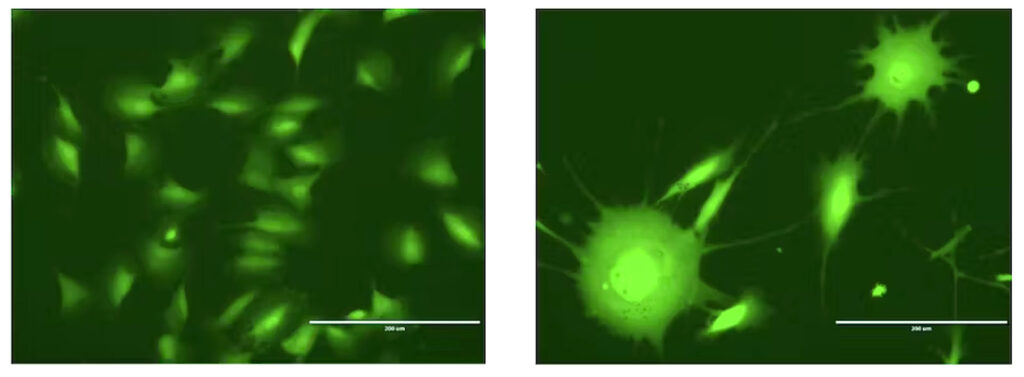
Scientists have also linked chronic arsenic exposure to the development of cancer stem cells. These are cells within tumors thought to be responsible for cancer growth and spread.
Like normal stem cells in the body, cancer stem cells can develop into many different types of cells. At what stage of cellular development a stem cell acquires the genetic mutation that turns it into a cancer stem cell remains unknown.
Our research aims to identify what type of cell arsenic targets to form a cancer stem cell.
We are currently using cell cultures obtained from the same organ at different stages of cellular development to examine how the origins of cells affect the formation of cancer stem cells.
Preventing chronic arsenic exposure is critical to reducing the burden of arsenic-related health effects.
Further research is needed to understand arsenic-induced cancer stem cell formation and develop effective strategies to prevent it.
In the meantime, continued monitoring and regulation of this toxic metal in food and water sources could help improve the health of affected communities.
Originally published by The Conversation.
Cristina Andrade-Feraud is a Ph.D. candidate in Environmental Health Sciences at Florida International University.
Diana Azzam is an assistant professor of Environmental Health Sciences at Florida International University.