Login
Login
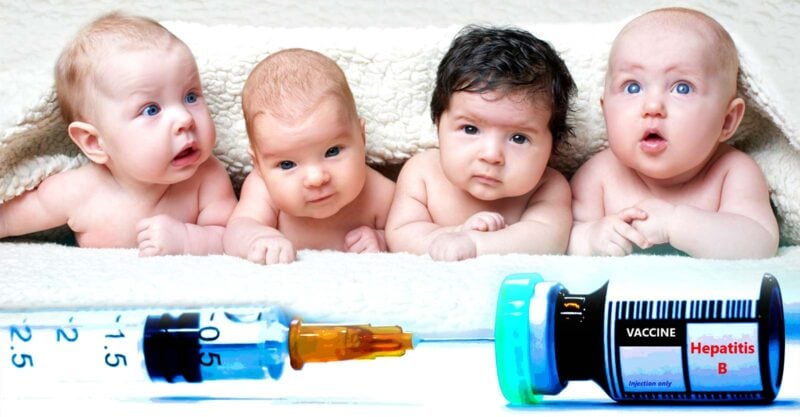


On Dec. 5, the Centers for Disease Control and Prevention (CDC) removed its long-standing recommendation that every U.S. newborn receive the first dose of the hepatitis B vaccine within 24 hours of birth.
While some authorities continue to assert that the hepatitis B vaccine is safe, two of my own studies provide evidence suggesting it may be dangerous — and in doing so, support the CDC’s policy change.
In 2012, Dr. Gary Goldman and I published a study examining more than 38,000 infants who were either hospitalized or died after receiving their vaccines. We grouped the infants by the number of vaccine doses — ranging from one to eight — they had received before their serious adverse event.
Among infants who received two vaccine doses, the hospitalization rate was 11%. For those who received three doses, it rose to 12.4%, and it continued to climb steadily with each additional dose. By the time infants had received eight doses, the hospitalization rate reached 23.5%.
Infants who received five to eight vaccines also showed significantly higher death rates compared to those who received one to four.
One finding, however, stood out: infants who had received only a single vaccine — the hepatitis B shot typically given at birth — showed an unusually high rate of hospitalization and death. We identified this as an anomaly.
Eleven years later, in 2023, we published another study comparing mortality rates among developed nations with differing immunization schedules.
One of our sub-studies focused specifically on countries that required their newborns to receive two vaccines at birth versus those that required none. (In some nations, newborns received a hepatitis B vaccine; in others, a tuberculosis vaccine; and in some cases, both.)
We found that nations requiring two vaccines at birth had significantly higher mortality rates.


To explore why this might occur, we can look to Dr. Peter Aaby’s work on vaccines and what he describes as non-specific effects. In his studies, Aaby reported that live vaccines — such as measles and oral polio — were associated with reductions in overall mortality, while non-live vaccines — including hepatitis B, DTP and inactivated polio — were associated with increases in overall mortality.
Two large studies from India concluded that the tuberculosis vaccine had no measurable effect on infant mortality. Based on these findings, the hepatitis B vaccine would therefore be expected to increase overall morbidity and mortality.
The CDC’s Advisory Committee on Immunization Practices (ACIP) was both wise and correct in removing the hepatitis B vaccine from the newborn schedule. Their decision reflected the fact that the shot is unnecessary. Newborns don’t benefit from receiving the hepatitis B vaccine at birth. However, studies provide evidence suggesting the vaccine may be harmful as well.