 Login
Login


The Years That Changed Us: Remembering COVID and Defending Our Future
The COVID-19 years tested our freedoms, strained our relationships, and revealed how quickly fear can reshape a nation. As we return to normalcy, we face a defining choice: forget what happened, or ensure it never happens again. The COVID Justice Resolution is a call for reflection, accountability, and lasting constitutional guardrails. Sign the petition at COVIDJustice.org and help defend the future.
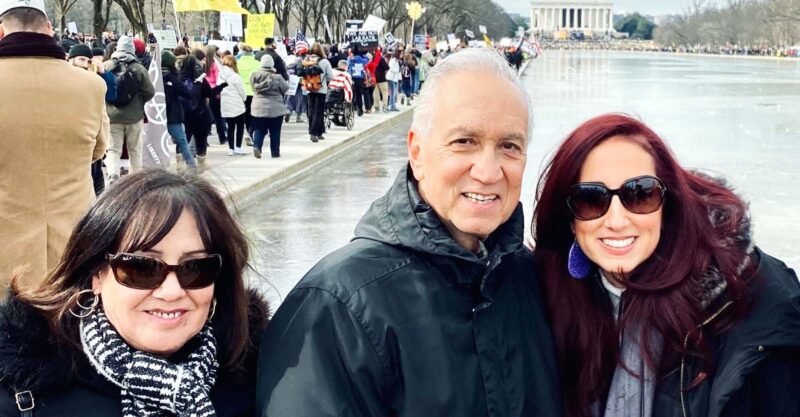
Stephanie Locricchio with parents, Loretta and Michael Buono, at the “Defeat the Mandates” rally in D.C.
With COVID-19 in the rearview mirror and life seemingly back to “normal,” it can be tempting to move on. However, we must remember what those years revealed about our institutions, our communities, and ourselves.
For me, this story began before 2020, when New York eliminated religious exemptions for childhood vaccinations. To protect my parental rights and deeply held beliefs, I moved my family to New Jersey.
Soon after, a similar bill surfaced there, leading to what many of us remember as the “Battle of Trenton.” We preserved those exemptions, but the victory was brief.
Almost immediately, we were thrust into the COVID Era, where emergency powers, mandates, and restrictions tested constitutional principles in ways few could have imagined. Panic set in, headlines blared urgency, nightly news replayed images of overwhelmed hospitals, and we were told to prepare for “two weeks to flatten the curve.”
Those weeks quickly turned daily life upside down: maintaining “social distance,” wearing masks, closing businesses and schools, canceling gatherings, staying home and stocking up.
Store shelves emptied even for basics like toilet paper. People lined up for groceries with special shopping hours for seniors. Parks were roped off like crime scenes, playgrounds sat empty and basketball hoops were removed.
Hugs became elbow bumps, shared meals gave way to isolation, conversation to suspicion. Neighbors reported one another for events deemed “non-essential,” and human connection, once instinctive, suddenly felt forbidden.
Looking back, I have come to understand that fear itself became a kind of contagion. It spread rapidly through headlines, projections and emergency messaging. It altered behavior. It strained relationships. It reshaped what felt acceptable in a free society.
I remember teaching my last yoga class before the shutdowns during those early days of “two weeks to flatten the curve.” Standing in that room, I felt a quiet certainty that it would not be two weeks. It felt like one of those inflection points in history where you sense the world is about to change in ways that cannot be undone.
My 13-year-old shifted abruptly to online learning. Overnight, school became a screen. Socialization disappeared. Conversation was replaced with isolation. The developmental and emotional toll of that disruption is something many families are still processing, with long-term impacts that may not yet be fully understood.
By May 2020, I was back out protesting, this time against policies that confined healthy people to their homes and shuttered small businesses. I longed for normalcy and human connection. I showed my face when masks were socially enforced and hugged people when distance was the norm.

There was a cost and many of my most cherished relationships were strained. I was disinvited from family gatherings, birthday parties and holiday celebrations — not because I was afraid, but because others were.
In my new neighborhood, I became “the talk.” My son was singled out for having a “crazy mom.” I found myself calling stores in advance just to ask whether I would be allowed to shop without a mask.
I was stared at, pointed at, sometimes asked to leave. On one occasion, I even had the police called on me at a furniture store. During this time, I felt like a contagion, a unicorn, a threat to the status quo. The social and emotional cost was heavy.
There was fear of exposure, fear of illness, fear that my presence, especially after being in crowds, might put someone at risk. The isolation is a feeling I remember all too well.
After attending rallies, I was expected to isolate myself from family members. When I did see my parents, I masked and kept my distance, an unnatural barrier between us where there had once only been closeness.
Connection, once effortless, became conditional. Presence required compliance. Disagreement carried consequences. At the time, I thought that was the hardest part. I was wrong.
When the vaccines became available, encouragement quickly turned into pressure and then into mandates. We watched elected officials receive their shots on live television.
Incentives followed: free beers, burgers and fries, cash prizes, and even marijuana in some states. Compliance was rewarded and hesitation was condemned.
The media narrative hardened. Those who questioned safety or policy were cast as irresponsible, even dangerous, accused of prolonging the pandemic simply for asking questions.
The divide widened. Mandates and proof-of-vaccination requirements soon governed access to workplaces, restaurants, events, and public spaces. Employment hinged on medical status. Public participation required disclosure. The damage from that rupture is still unfolding.
Fear had become the dominant currency, and yet, even in that climate, I witnessed something remarkable. Over time, through difficult conversations and lived experience, even within my own family, the fear began to loosen its grip.
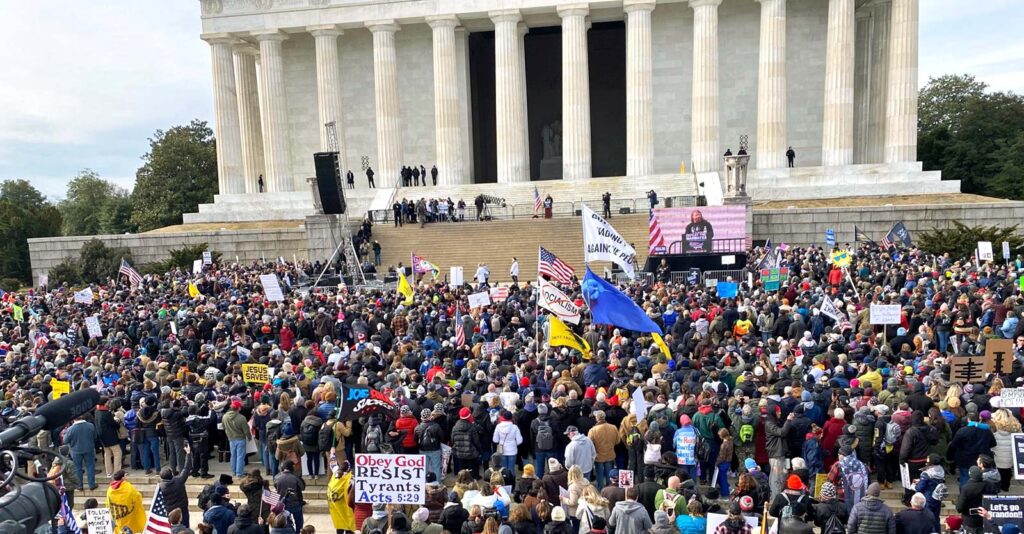
My parents, who once stood masked and socially distant, eventually stood beside me at a “Defeat the Mandates” rally, handing out flyers, passing out stickers, hugging total strangers, smiling, unafraid. It was a moment I will never forget and a powerful reminder to all: fear spreads quickly, but so does courage.
When truth surfaces and dialogue replaces panic, hearts can change, minds can open and relationships can heal. But fear does not simply disappear. Its imprint lingers in policies, emergency frameworks and the normalization of extraordinary powers.
That is why vigilance matters. Regardless of perspective, those years left a profound mark: children missed milestones, small businesses closed for good, families fractured, and trust in institutions either strengthened or eroded.
Reflection is not about reopening wounds; it is about recognizing how quickly emergency powers expanded, how easily dissent was sidelined and how deeply policies shaped ordinary lives. History offers lessons if we are willing to learn from them.
Children’s Health Defense, together with five other medical freedom organizations, launched the COVID Justice Resolution, a pledge to ensure the mistakes of the COVID-19 Era are never repeated.
It recognizes that prolonged school closures, business shutdowns, mandates, censorship, forced medical compliance, and unchecked emergency powers caused deep and lasting harm, particularly to children, families, small businesses and the most vulnerable.
It reaffirms that constitutional rights do not disappear during a crisis, and establishes clear guardrails for the future: time-limited emergencies, legislative oversight, protection of bodily autonomy and religious freedom, transparency in data, prohibition of government-driven censorship and accountability for economic harm.
Most importantly, it expresses regret for the suffering endured and commits to restoring balance between public health and fundamental liberty.
Signing and sharing the resolution at COVIDJustice.org is a step toward ensuring that fear never again overrides freedom and that future generations inherit a nation that learns from its trials rather than repeating them.
Now is the moment to act. Sign the resolution and share it with your social circles. Urge your senators to support the COVID Justice Resolution.
Help draw a clear line for the future because the next crisis will come, and whether our rights endure will depend on what we demand now.
Do you have a story you’d like to share with the CHD Community? Click here for details.