 Login
Login


Florida Families Call for Continued Funding of Food Toxin Testing Initiative
Florida parents are pushing for continued funding of the state’s independent food toxin testing initiative, which has already uncovered harmful contaminants in foods commonly eaten by children. Advocates say ongoing testing is essential for transparency, informed choices, and protecting children’s health.
Florida parents work hard to make the best choices they can for their children’s health. Many read ingredient labels carefully, choose organic foods when possible, and try to avoid harmful additives.
But there is one category of exposure that families cannot see: hidden contaminants not listed on food labels.
Recent independent testing conducted through Florida’s Exposing Food Toxins initiative, also known as Healthy Florida First, has identified concerning levels of heavy metals and pesticide residues in foods commonly consumed by children.
The initiative, launched with the support of Florida First Lady Casey DeSantis and Florida Surgeon General Joseph Ladapo, was created to provide independent testing and greater transparency about contaminants that may be present in the food supply.
Take Action: Tell Florida Legislators to Fund Independent Food Toxin Testing
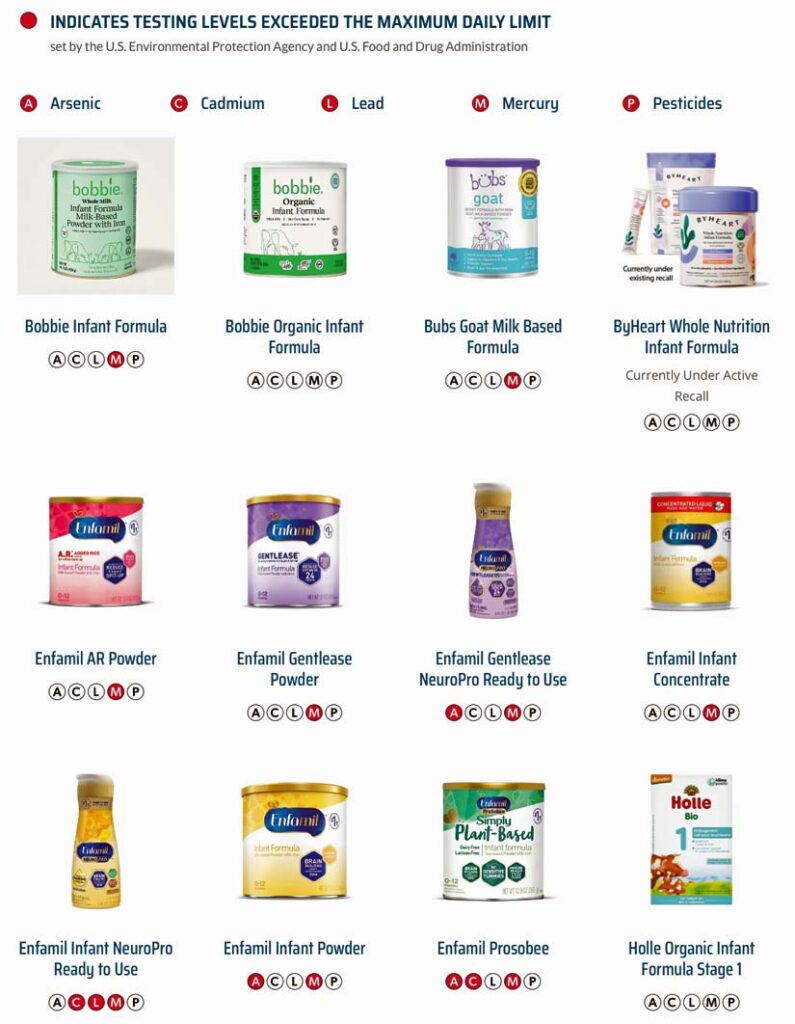
Early findings have already raised concerns. Florida officials tested 24 infant formula products for heavy metals and detected elevated levels of arsenic, cadmium, lead, and mercury in many of them.
Additional testing also identified arsenic in multiple candy products and glyphosate herbicide in several bread samples.
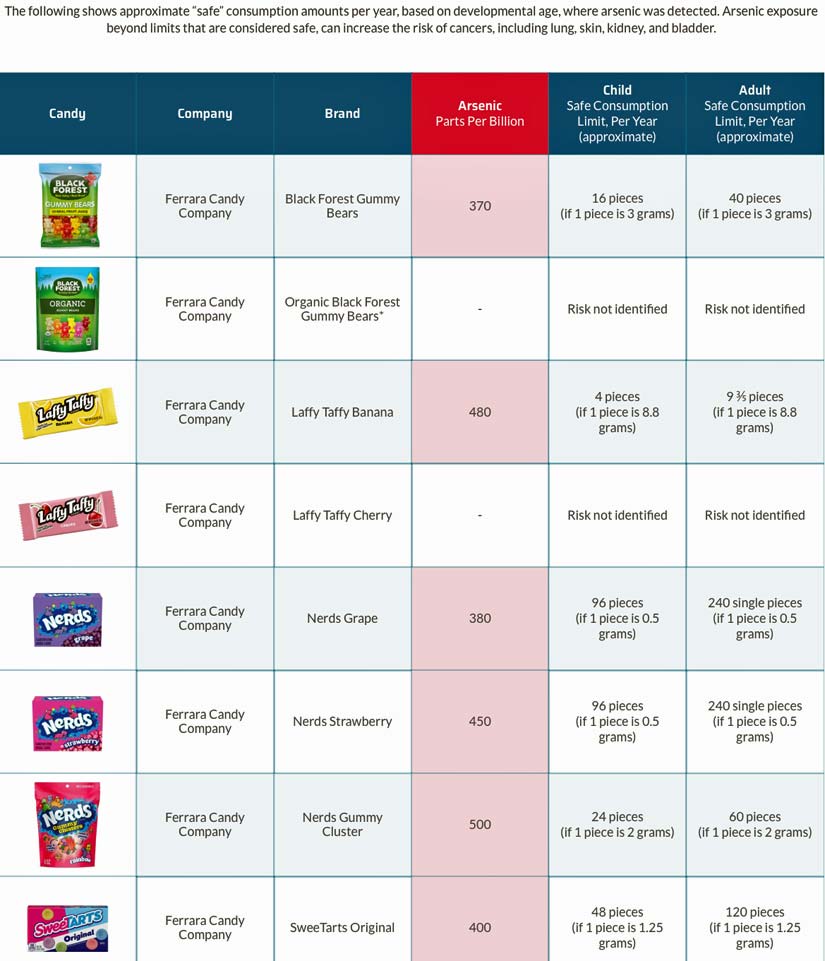

These contaminants are not disclosed on food labels — so parents can’t see them when making purchasing decisions.
Some of the substances identified in testing are widely recognized as potential health risks for children. For example, lead exposure is linked to developmental and neurological harm and is considered particularly dangerous because there is no safe level of exposure for young children.
Heavy metals such as arsenic and cadmium have also been associated with kidney damage, neurological effects, and increased cancer risk.
Research has also raised concerns about pesticide exposure. Certain pesticide residues may interfere with hormone systems and neurological development, particularly during early childhood when the brain is still developing.
Florida’s Exposing Food Toxins program was designed to help address this information gap by providing transparent testing data that families, researchers, and policymakers can review.
However, the initiative has only just begun its work.
Governor DeSantis’ proposed budget for the next fiscal year includes $5 million to continue funding the program. While the Florida Senate allocated $2.5 million, the House included no funding to keep the program in place.
Supporters say this investment is small compared with the potential benefits of identifying and reducing harmful exposures. Florida spends $1-$2 billion each year on special education services, many of which address developmental and neurological challenges affecting children.
While these conditions have multiple contributing factors, reducing exposure to known neurotoxins is widely considered a sensible prevention strategy.
Advocates also note that federal regulators have often been slow to act on contamination issues in the food supply. State-level testing initiatives can provide valuable data that Florida families need now to make informed food choices.
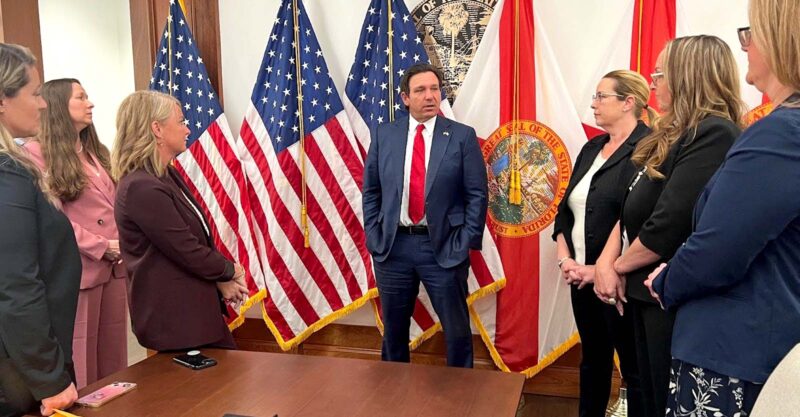
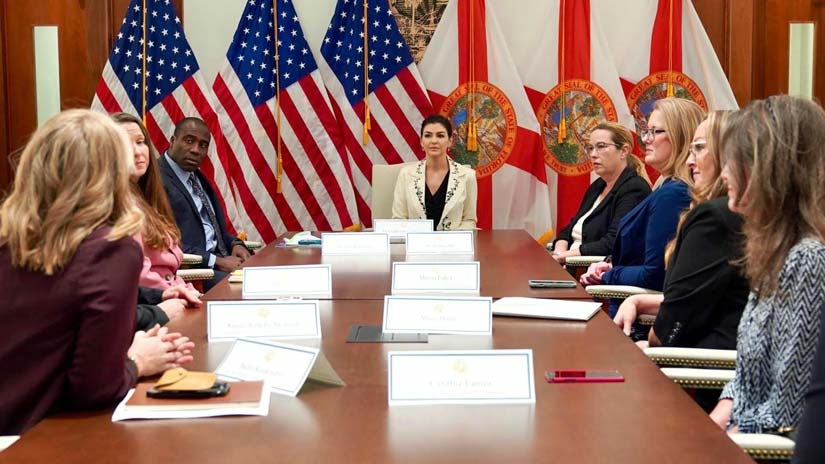
Recently, a coalition of Florida health advocates met with the governor and his wife, and Ladapo to discuss the importance of continuing the state’s food toxin testing initiative.
Participants included Maija C. Hahn of Children’s Health Defense Florida, Elyse Young of Guiding the Impact, Bailey Kuykendoll of Stand for Health Freedom, Aimee Villella McBride of the Global Wellness Forum, Susan Sweetin of NVIC and Freedom Health Connect, and other “MAHA moms” advocating for greater transparency in the food supply.
Advocates emphasized that independent testing programs provide families with information that is not disclosed on food labels and allow parents to make more informed decisions about the foods they purchase.
As lawmakers consider continued funding for the initiative, many parents and advocacy organizations believe Florida has an opportunity to lead the nation in food transparency and consumer awareness.
By supporting continued funding for the Healthy Florida First program, Florida lawmakers have an opportunity to respond to the priorities of engaged voters who want healthier, safer food for their children.
For parents who believe food transparency matters, now is the time to speak up.
To learn more about the testing results and take action, visit ExposingFoodToxins.com and contact your Florida legislators to support continued funding for independent food toxin testing. Take Action Now!
The views and opinions expressed in this article are those of the authors and do not necessarily reflect the views of Children’s Health Defense.
Do you have a story you’d like to share with the CHD Community? Click here for details.