
 Login
Login


Calling All Coloradans! Ask Gov. Polis to Veto This Bad Vaccine Bill
Gov. Jared Polis has until March 27 to veto a bill that reinforces reliance on the American Academy of Pediatrics for vaccine recommendations and expands liability protections for those involved in vaccine administration. Health freedom advocates urge residents to contact Gov. Polis before the March 27 deadline and call for a veto.
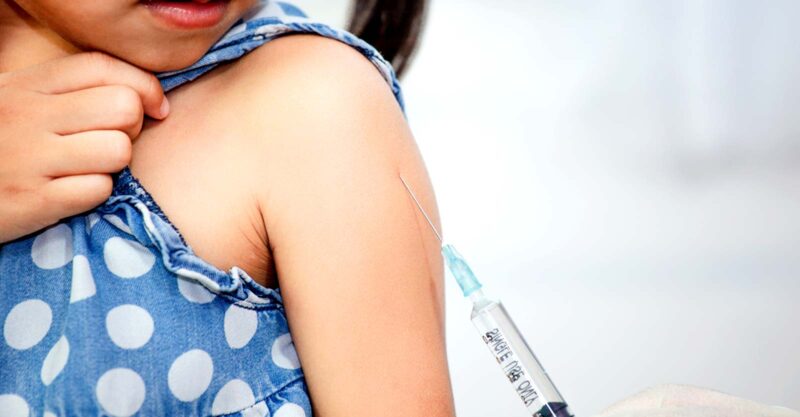
Now is the time for Colorado residents to contact Gov. Jared Polis and urge him to veto Senate Bill 26-032 (SB 32), a bill that reinforces reliance on the American Academy of Pediatrics for vaccine recommendations and expands liability protections for those involved in vaccine administration.
“Promoting Immunization Access” moved quickly through the legislature. It passed the Senate with little resistance and, after amendments, cleared the House.
Gov. Polis has until March 27 to sign or reject the bill.
Along with dozens of other Colorado health freedom advocates, I followed the bill closely. I testified before the Health and Human Services Committee hearings — first in the Senate on Jan. 29, then in the House on Feb. 25.
Pam Long, director of the Children’s Health Defense Military Chapter and a tireless advocate for health freedom in Colorado, warned of a broader, long-term agenda embedded in the legislation. She said:
“Then there’s a whole section in SB 32 on how Colorado needs to protect future pharmaceutical industry interests on mRNA cancer therapy. This bill is signaling the long game: give the state board of health the power to mandate new vaccines, create an adult vaccine schedule, and in the near future introduce mRNA cancer therapy.”
Throughout the hearings, bill sponsors repeatedly described recent changes by the Advisory Committee on Immunization Practices and the U.S. Department of Health and Human Services as “dysfunctional,” suggesting that unreliable science is coming out of Washington, D.C.
They positioned SB 32 as a way to preserve “evidence-based science” in Colorado.
I focused my testimony on the bill’s liability provisions. If everyone involved in vaccine administration needs legal protection, what does that imply? At a minimum, it acknowledges the risk of injury or death.
The bill carefully spells out who cannot be held liable, but never clearly identifies who can. I also pointed to examples of what so-called “evidence-based science” has produced over the past few decades.
I knew stopping the bill outright was unlikely. But I wanted my testimony on record — to challenge the logic behind the bill and, I hoped, prompt others to question which side is truly following the evidence.
After I testified at the House hearing, I passed one of the bill’s sponsors, Rep. Lisa Feret. She thanked me and said I raised good points. I appreciated the acknowledgment, and it stuck with me.
Later, I spoke with Rep. Brandi Bradley, a strong ally on health freedom issues. She asked me to email her my testimony so she could reference it when the bill reached the House floor.
Weeks later, during the bill’s second reading on March 13, I expected Bradley to pull a few quotes. Instead, she read my entire testimony aloud.
That moment came during a debate over an amendment introduced by Rep. Stephanie Luck to remove the bill’s liability shield. Feret responded by urging a “no” vote on that amendment, saying a separate compromise amendment was coming.
“In the spirit of making good policy, we will be bringing an amendment forward to take out that manufacturer liability,” she said. “I know it’s not everything that you want, but it’s at least something, and I hope it’s a fair compromise.”
Soon after, the sponsors introduced their amendment to remove liability protections for manufacturers. It passed.
At the time, I saw it as a small victory. The bill itself remained deeply flawed, but this felt like meaningful movement. It seemed, briefly, like genuine bipartisan cooperation.
But that impression didn’t last.
Earlier in the process — while the bill was still in the Senate — the term “wholesaler” had been added to the list of entities shielded from liability. That language was not part of the original bill. The House removed “manufacturer” in its amendment, but left “wholesaler” untouched.
That detail matters.
In practice, a wholesaler sits in the distribution chain between manufacturers and providers. By keeping “wholesaler” in the bill, the amendment may still protect companies involved in getting vaccines to market — even if “manufacturer” is no longer explicitly named. Depending on how the term is interpreted, the protection could be just as broad or broader.
I reached out to Feret to ask whether the amendment truly changed anything, given that “wholesaler” remained. She responded that the bill arrived from the Senate with that language already included, and that manufacturers and wholesalers are distinct entities.
Technically, that may be true. But the bill never defines “wholesaler.” If this ends up in court, how will that term be interpreted? Would companies like Pfizer, Merck or Sanofi fall under that category? It’s unclear. And that ambiguity could matter.
So what actually happened here?
Did lawmakers offer a genuine compromise in response to public concern? Or did the amendment create the appearance of change while leaving much of the liability shield intact?
I’d like to believe that voices like ours made a difference, and that some lawmakers are willing to listen. But the final language in this bill raises real questions about how meaningful that “win” actually was.
Which is why this isn’t over.
If you live in Colorado, contact Polis today and ask him to veto SB 32.
Do you have a story you’d like to share with the CHD Community? Click here for details.